

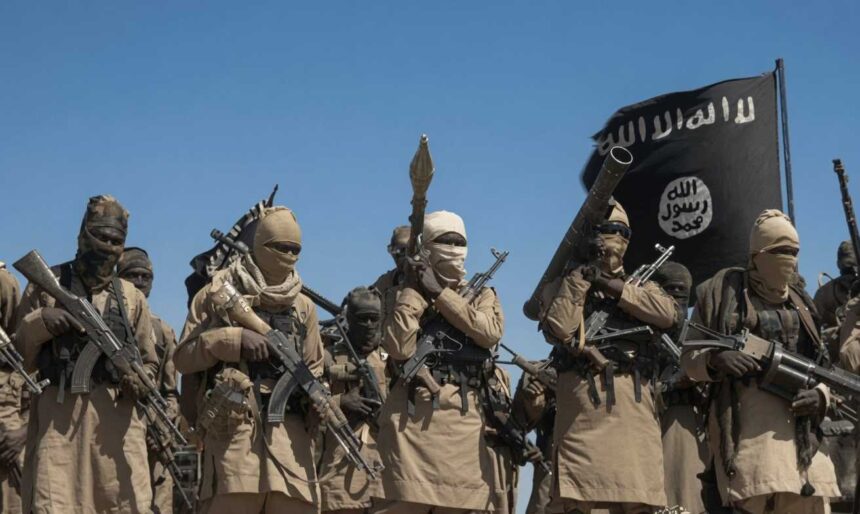
The United States Treasury Department’s Office of Foreign Assets Control and the US Department of State on Monday designated Lagos-based Mukhtar Adamu Muhammad and three Nigerian bureaux de change he allegedly owned or controlled as financial facilitators of the Islamic State in West Africa, in a sanctions action that deepens the US-Nigeria counterterrorism partnership and exposes how terrorist networks exploit informal currency exchanges.
The three designated firms are Generation Currency Bureau De Change Limited in Lagos, Nine to Nine Exchange Bureau De Change Limited in Ikeja, and Manhattan Bureau De Change Limited in Kano. US authorities alleged Muhammad used the businesses as conduits for moving funds linked to ISIS-West Africa operations, including transfers that supported the group’s General Directorate of Provinces, which oversees attack planning and hostage operations.
Network Spans France, Syria and Nigeria
Related News
The action targeted a broader network of three individuals and six entities operating across Europe, the Middle East and West Africa. US Department of State spokesperson Thomas Pigott said the sanctions were cutting off the financial lifelines that enabled ISIS to fund attacks, support its regional affiliates, and threaten civilians. The network also included France-based Miloud Abderrahmane, accused of providing explosive-related information to ISIS supporters, and Syria-based Abdelhakim Boukich, who allegedly used cryptocurrency to transfer funds for ISIS associates across several countries including the United States.
All property and interests belonging to the designated individuals and entities under US jurisdiction were blocked. American citizens and businesses are prohibited from engaging in transactions with them. Washington warned that foreign financial institutions risk secondary sanctions for significant dealings with the designated parties.
Deepens US-Nigeria Partnership
Related News
The US Department of State reaffirmed its strong partnership with Nigeria, noting that the two countries had jointly conducted the May 16, 2026 operation that killed Abu-Bilal al-Minuki, described as ISIS’s global second-in-command. Furthermore, security analysts said the designations reflected the US Treasury’s 2026 National Terrorist Financing Risk Assessment, which identified decentralised financial intermediaries as a key vulnerability. Notably, Nigeria ranks fourth globally for terrorism impact according to the Global Terrorism Index 2026, with extremist fatalities rising 46 per cent. Consequently, the BDC sanctions signal that financial disruption, not just military operations, is now central to the US-Nigeria counter-ISIS strategy.