

By Bello Abdul’Azeez
Every society that aspires to develop must answer one basic question: who pays for development?
Related News
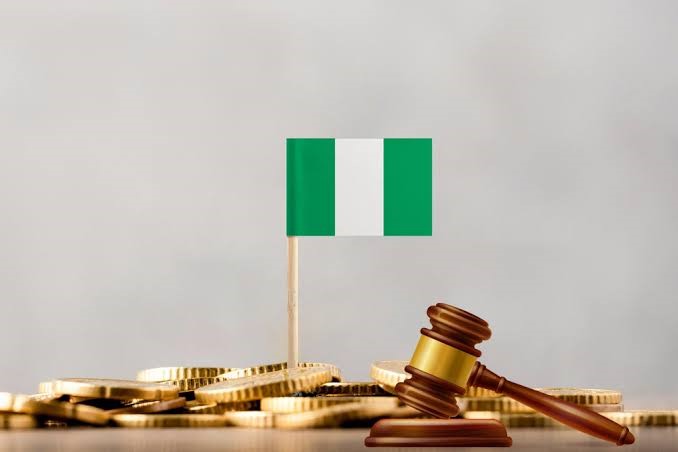
Roads, schools, hospitals, security, courts, ports, power infrastructure, digital systems and public institutions do not build themselves. They require money. For a country like Nigeria, with a young and growing population, rising social needs and enormous infrastructure gaps, the answer is clear: everyone must contribute fairly, especially those who benefit most from the Nigerian economy. This is why large businesses and multinational enterprises must pay their fair share of taxes.
Nigeria welcomes investment. Businesses create jobs, supply goods and services, bring technology, develop markets and contribute to economic growth. No serious country should be hostile to enterprise. But there is a difference between encouraging business and allowing large companies to extract value from a country without making a fair contribution to the public goods that make their profits possible.
Large businesses use Nigeria’s roads to move goods. They depend on Nigerian consumers to buy their products. They rely on public institutions to enforce contracts, protect property, regulate markets and provide security. They use ports, airports, telecommunications networks, banking systems and other national infrastructure. They also benefit from the labour, talent and purchasing power of the Nigerian people. It is therefore only fair that they contribute appropriately to the country from which they earn income.
Related News
Taxes are the price of civilisation. They are the contribution citizens and businesses make so that society can function. When large businesses pay fairly, government has more resources to invest in infrastructure, education, healthcare, security and economic stability. When they do not, the burden falls unfairly on Nigerians, small businesses and compliant taxpayers.
This is particularly important in Nigeria because public revenue remains too low for the scale of the country’s development needs. Millions of Nigerians expect better roads, safer communities, improved schools, reliable healthcare and jobs for young people. These expectations are legitimate. But development cannot be financed by hope alone. It requires a strong and fair revenue system.
For too long, some large businesses have benefited from gaps in the tax system. Some shift profits to low-tax jurisdictions. Some load Nigerian operations with artificial costs. Some use complex related-party transactions to reduce taxable income. Some rely on aggressive tax planning that may be technically sophisticated but morally questionable. Others enjoy incentives or exemptions without delivering commensurate benefits to the economy. This must change.
A fair tax system should not punish success. Companies that invest, innovate and create jobs should be supported. But support for investment must not become a licence to avoid tax. Profit made in Nigeria, from Nigerian resources, Nigerian consumers and Nigerian markets, should be taxed fairly in Nigeria.
This is not anti-business. In fact, it is pro-development and pro-fairness. Honest businesses are hurt when competitors avoid taxes. Small and medium businesses are hurt when powerful companies use influence, complexity or cross-border structures to reduce their obligations. Citizens are hurt when government lacks the resources to provide basic services. The economy is hurt when tax avoidance weakens public trust and deepens inequality.
Fair taxation creates a level playing field. It ensures that companies compete on productivity, innovation, quality and service — not on who can hire the most expensive advisers to escape tax. It also strengthens the social contract. When citizens see that large businesses and multinationals are paying fairly, they are more likely to believe that the tax system is not designed only for the weak and compliant.
Large companies also have a responsibility beyond legal compliance. They often speak of corporate social responsibility, sustainability and commitment to the communities where they operate. But the first responsibility of a profitable business is not publicity-driven charity. It is to obey the law, pay workers fairly, respect consumers, protect the environment and pay the taxes properly due.
A company cannot claim to be a partner in Nigeria’s development while aggressively avoiding taxes in Nigeria. It cannot celebrate Nigerian consumers while denying the Nigerian state the revenue needed to serve those same consumers. It cannot rely on public infrastructure and institutions while refusing to contribute fairly to their maintenance.
The same principle applies to multinational enterprises. Nigeria should remain open to foreign investment, but openness must not mean weakness. Multinationals are welcome to invest, grow and profit. But where value is created in Nigeria, tax must be paid in Nigeria. That is the standard expected in serious economies around the world.
The government also has a duty. Tax laws must be clear. Tax administration must be fair, professional and efficient. Businesses must not be harassed. Disputes must be resolved transparently. But fairness cuts both ways. Just as government must administer tax fairly, large businesses must not hide behind complexity to avoid their obligations. A tax system cannot work if the largest economic actors treat tax as optional or as something to be negotiated away.
The country needs revenue to build infrastructure, improve security, support education, expand healthcare, strengthen institutions and create the conditions for long-term growth. Borrowing alone cannot solve this problem. Oil revenue alone cannot solve it. Ordinary citizens and small businesses alone cannot carry the burden. Large businesses and multinationals must contribute their fair share.
This is not a call for excessive taxation. It is a call for fair taxation. It is a call for a system where businesses can thrive, but where profit comes with responsibility. It is a call for a Nigeria where the strongest do not shift the burden to the weakest.
Development requires partnership. Government must provide an enabling environment. Nigerians must comply with their obligations. Large businesses and multinationals, because of their scale, influence and profits, carry a special responsibility.
Nigeria cannot become a developed country if those who benefit most from its economy do not help pay for its development. Fair tax is not merely a legal duty. It is a national duty.