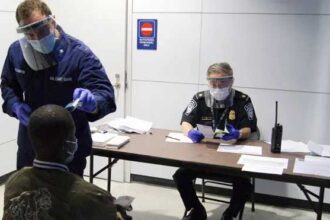


Seven or eight outbreaks at once. That is the reality the Nigeria Centre for Disease Control and Prevention is managing right now, even as it watches the borders for a possible Ebola arrival.
NCDC Director General Dr Jide Idris has disclosed that Nigeria is currently managing between seven and eight simultaneous disease outbreaks across the country, including cholera and Lassa fever, some of which continue to cause fatalities. The disclosure, made during an interview broadcast on Arise News, paints a fuller picture of the public health pressures facing Nigeria beyond the widely discussed Ebola preparedness concerns.
The Outbreaks Nigeria Is Fighting
Related News
Lassa fever and cholera have together claimed 275 lives so far in 2026, according to earlier NCDC figures. However, Dr Idris’s latest comments confirm that these two diseases are not operating in isolation. Several other epidemic prone illnesses are active simultaneously across different states, stretching the agency’s surveillance and response capacity.
Dr Idris linked the persistence of some of these diseases to cultural practices and health behaviours in certain communities, specifically mentioning the consumption of rodents in some areas as a contributing factor to continued Lassa fever transmission. That detail highlights how public health interventions must address behaviour change alongside medical response.
A Call for State Government Responsibility
Related News
One of the more pointed parts of Dr Idris’s comments was his call for state governments to take greater responsibility for outbreak preparedness and response, rather than relying heavily on federal intervention. This reflects a broader tension in Nigeria’s federal health system, where states often have constitutional responsibility for healthcare delivery but limited independent resources to fund robust outbreak response.
The recent agreement between Nigeria and the United States, which includes a domestic commitment of six per cent of executed budgets toward health, may help address some of this funding gap if implemented consistently at the state level. Furthermore, the NCDC continues to expand laboratory capacity and train health workers in high risk states, regardless of the funding source.
A System Under Strain, But Functioning
Managing seven or eight outbreaks simultaneously while also preparing for a potential Ebola importation would stretch any health system. However, Dr Idris’s tone throughout his public communications has remained one of measured confidence rather than alarm.
He pointed to Nigeria’s successful containment of Ebola in 2014 as evidence of the country’s underlying capability when systems are properly activated. The current situation tests that capability across multiple fronts at once. Nigerians, meanwhile, are being asked to practice basic hygiene, seek care early, and trust a system that is working hard under genuinely difficult conditions.