

Nigeria’s real Gross Domestic Product grew by 3.89 per cent in the first quarter of 2026, the National Bureau of Statistics confirmed, building on the 4.07 per cent growth recorded in the fourth quarter of 2025 and sustaining a positive economic trajectory that the Tinubu administration cited as one of its key Democracy Day achievements.
The NBS data showed that non-oil sectors continued to drive the bulk of economic activity, with trade, information and communication technology, finance and insurance, and agriculture among the top contributors to growth in the quarter. The oil sector’s contribution was constrained by production disruptions and infrastructure challenges, but improved crude output in subsequent months suggested a stronger oil sector contribution ahead.
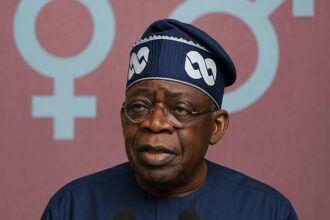
President Tinubu cited the GDP figures in his Democracy Day address, saying the available statistical information showed improvement in output, investment, and trade. He noted that the growth figures came against a backdrop of difficult global economic conditions and represented evidence that Nigeria’s structural reforms were creating a more stable and productive economic environment.
Related News
Inflation Still Elevated but Declining
However, the positive GDP numbers exist alongside persistent consumer hardship driven by elevated inflation, which remains one of the most immediate concerns for ordinary Nigerians. The SGF acknowledged at the Democracy Day press conference that inflation had been painful, while insisting it was on a downward trend. Headline inflation decelerated from a 24-month high of 34.8 per cent in December 2024 to approximately 14.45 per cent by November 2025, with projections suggesting further moderation toward 12 per cent in 2026.
Furthermore, the IMF projects Nigeria’s economy will grow by approximately 4.1 per cent in full-year 2026, slightly above the 4.0 per cent recorded in 2025. The World Bank has similarly issued positive medium-term growth forecasts, citing the impact of the foreign exchange market liberalisation, improved oil production, and the early effects of the tax reform laws signed in June 2025 as supporting factors.
Related News
Still, consumer confidence surveys and business conditions data continue to show that many Nigerians do not yet feel the benefit of improving headline economic indicators. The Proshare composite PMI held in contraction territory at 49.6 in June, suggesting that while the macro picture is improving, the real sector economy has not yet entered a sustained expansion phase. Notably, S&P Global Ratings’ credit upgrade from B-minus to B in May 2026 provided the most credible external validation of the government’s economic narrative so far. Consequently, the challenge for the Tinubu administration in the months ahead is to translate the improving macro data into tangible improvements in living standards that ordinary Nigerians can feel and measure in their daily lives.
FG Disburses N184bn in Student Loans
Meanwhile, the government confirmed that over N184 billion had been disbursed through the Student Loan Scheme to more than one million beneficiaries since the signing of the Student Loan Act in April 2024. In addition, the Nigerian Consumer Credit Corporation had disbursed N37 billion in consumer loans, with more than half of the beneficiaries accessing formal credit for the first time. As a result, the administration’s social protection programmes are reaching a growing number of Nigerians, even as critics argue that the scale of the programmes remains inadequate relative to the depth of poverty across the country.