


By Adebayo Williams
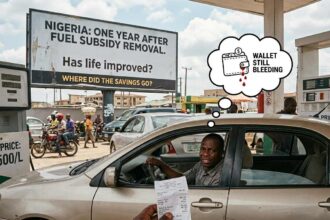
Three years ago, one dollar bought N750 on the parallel market. I remember because I sent money to a cousin abroad and felt the sting. Today, the same dollar buys N1,600. In some places, more. My salary has not doubled. Your salary has not doubled. The price of imported rice has doubled. The price of imported medicine has doubled. The price of hope has tripled. Do the math.
Related News
Here is what most people get wrong about the naira crisis. The problem is not that the currency is weak. The truth is that Nigeria has built an economy that imports everything and exports almost nothing of value. And here is why that matters right now: because no amount of central bank intervention can save a currency when the country has nothing to sell that the world wants to buy.
What the official report won’t tell you
The Central Bank will announce new measures. They will restrict access to dollars. They will punish aboki traders. They will blame speculators. And none of it will work. Because speculation is a symptom, not the disease. The disease is that Nigeria’s primary export is crude oil. We do not refine it. We do not control its price. And the world is moving away from it. The disease is that we import everything from toothpicks to tractors. The disease is that a Nigerian manufacturer cannot compete with Chinese imports because our electricity costs three times as much.
Related News
You cannot stabilize a currency by hunting speculators. You can only stabilize it by producing things people want to buy.
The numbers are brutal. Nigeria’s import bill dwarfs its export earnings. The country spends billions on fuel imports despite sitting on oil reserves. It spends billions on food imports despite having enough arable land to feed West Africa. Every dollar that leaves the country for imports is a vote of no confidence in Nigerian production.
To be fair…
Let me give the Central Bank its due. Managing a currency in a country with Nigeria’s challenges is extraordinarily difficult. Oil price volatility. Capital flight. Insecurity affecting agriculture. These are not problems the CBN created. And some of their policies, like the inflation targeting framework, make technical sense.
But here is where that defense fails. The CBN has been fighting the same war for a decade with the same weapons and expecting different results. Restricting access to dollars does not create dollars. It creates black markets. Banning aboki traders does not strengthen the naira. It drives the parallel market underground. The CBN is treating symptoms while the patient bleeds out from a wound no one wants to name.
The definition of insanity is doing the same thing and expecting different results. Nigerian currency policy has been clinically insane for years.
The human cost
I watched a small business owner in Abuja close her shop last month. She imported children’s clothing. When the naira was N750 to the dollar, she could price affordably and still make profit. When the naira hit N1,500, her costs doubled. She raised prices. Customers stopped coming. She lowered prices. She lost money on every sale. She closed. No drama. No protest. Just a woman who realized that the math no longer worked.
She is not alone. The Manufacturers Association of Nigeria reports that hundreds of factories have shut down or scaled back production in the last year. Each closure means jobs lost. Each job lost means families hurt. And each family hurt means fewer customers for every other business. It is a spiral. And spirals only end when they hit bottom.
What needs to happen
Nigeria must export value, not just crude. Process agricultural goods before shipping them. Manufacture components instead of importing finished products. Generate electricity reliably so factories can run. The solutions are not mysterious. They are just hard. They require investment. They require security. They require politicians who prioritize production over consumption.
Short term, the government must be honest with Nigerians. No more promises of a strong naira. No more claims that the worst is over. Tell us the truth. Tell us the plan. Tell us how long. We are adults. We can handle bad news. What we cannot handle is being lied to while our purchasing power evaporates.
Here is where we land. The naira is falling. My salary is not. The math does not lie. Until Nigeria produces something the world wants, the currency will keep sliding and our wallets will keep shrinking. No amount of central bank press releases can change that arithmetic. Only factories, farms, and electricity can.
Dr. Adebayo Williams
AKURE – [email protected]