

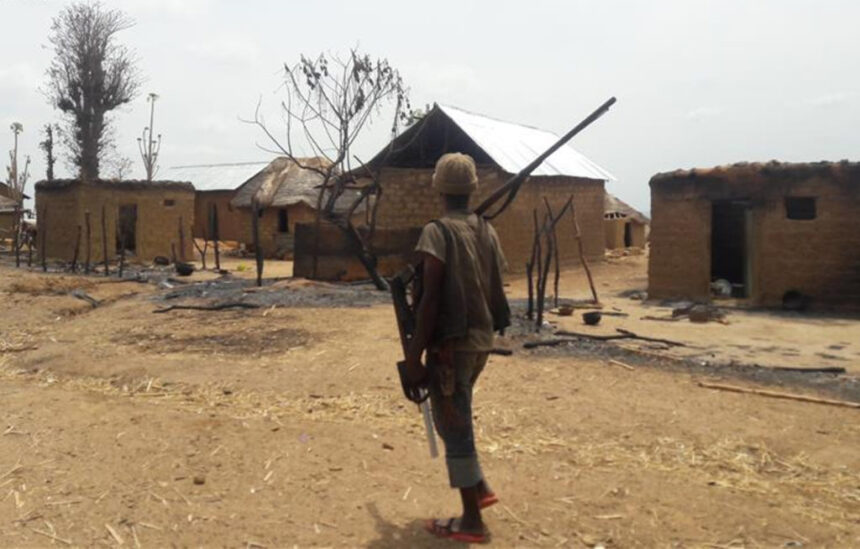
GUSAU — Malam Ibrahim Dankama grew up on the same piece of land his grandfather farmed. He knew every tree, every hill, every seasonal path that the cattle used to take. He was the fifth generation of his family to plant millet and sorghum in that corner of Zamfara State. He planned to be there for the rest of his life.
Then the bandits came. Not once, not twice. They came and came again. First, they took the livestock. Then they burned the granary. Then they kidnapped his nephew and demanded a ransom the family could not fully afford. When his neighbour was killed in the middle of the night for refusing to hand over his savings, Ibrahim knew it was time to leave.
“I left everything. My house, my farm, my ancestors’ graves. Everything. Because I had to choose between staying and dying,” Ibrahim said at a church compound in Gusau that now serves as a makeshift shelter for displaced families from his area.
Related News
He is not alone. Several families from his village have all fled to different locations across Zamfara State. The village, which once had dozens of homes and a small market, is now empty. The farms are untended. The bandits use the empty buildings as rest points between operations.
A Farming People Without Land
What makes Ibrahim’s situation particularly painful is the identity dimension of the loss. Zamfara farming communities have farmed the same land for generations. The land is not just an economic resource. It is a cultural anchor. It holds the graves of ancestors. It defines who a person is and where they come from.
Related News
When bandits displace farming families, they do not just take an income. They sever a connection to identity and heritage that cannot be rebuilt at a displacement camp in Gusau. Ibrahim said he does not know who he is without his land. He said his children are growing up not knowing their home.
The UN estimates that Nigeria loses billions of dollars annually in agricultural output due to displacement and insecurity in the northwest. Beyond the numbers, the human cost is a generation of children growing up without roots, without the agricultural knowledge their parents and grandparents accumulated, and without a sense of belonging to a place.
Government’s Absent Response
Ibrahim said no government official has visited his community since the displacement. No official has told him when it will be safe to return. No compensation has been offered for the property and livestock he lost. No timeline has been given for restoring security in his area.
He said what he hears from Abuja and Gusau is promises. He has heard so many promises that he no longer believes them. “They say they are fighting the bandits. But the bandits are still there. My farm is still empty. My nephew is still traumatised from the kidnapping. What exactly are they fighting?” Ibrahim asked.
It is a question that millions of displaced Nigerians in the northwest, northeast, and now the southwest are asking. On this INEC primary deadline day, while politicians file their candidacies for offices they will use to make more promises, Ibrahim is living in a borrowed space, waiting for a safety that never comes.