


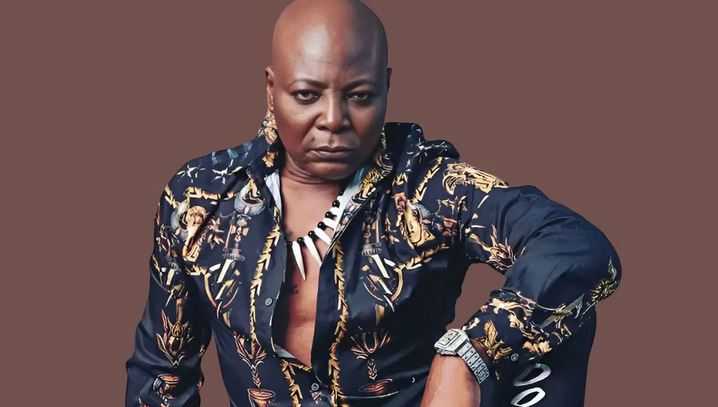
LAGOS — Long before social media gave everyone a voice, Charly Boy was already shaking Nigeria with eyeliner, braids, heavy bikes, and fearless rebellion. The Guardian Nigeria published a landmark tribute to Charles Chukwuemeka Oputa, known as the Area Fada, as he marks his 75th birthday this week.
The Guardian described Charly Boy as a man who did not follow culture but rewrote it. He was the first Nigerian public figure to challenge conventional norms of masculinity, respectability, and celebrity in the ways that have since become commonplace in Nigerian entertainment and social media culture.
Born in 1951 to Justice Chukwudifu Oputa, one of Nigeria’s most respected jurists, Charles Oputa chose a path that scandalised conservative Nigerian society. He wore tight leather outfits, rode Harley-Davidson motorcycles, pierced his ears, and spoke in ways that made him a permanent fixture in public conversation.
Related News
In the 1980s and 1990s, when Nigerian television and music were dominated by more conservative aesthetics, Charly Boy created a brand that was impossible to ignore. His music blended American rock and funk with Nigerian rhythms. His television appearances were events. His controversies were calculated disruptions of what he saw as a society too comfortable with its own conformity.
Cultural Pioneer
What Charly Boy pioneered in the 1980s and 1990s, younger Nigerian artists have continued and amplified in the 2020s. The boundary-pushing fashion of Nigerian musicians, the fearless self-expression of social media influencers, and the willingness of public figures to be provocative all have roots in the cultural permission that the Area Fada granted by doing it first.
Related News
Afrobeats superstars who challenge conventional norms, comedians who mock power without apology, and activists who use their bodies and voices as political instruments are all, in some ways, walking a path that Charly Boy cleared. His influence on Nigerian culture is deeper than his individual songs or television appearances suggest.
Furthermore, Charly Boy has been an outspoken political activist in his later years. He led protests against the Buhari administration’s economic failures and has consistently used his platform to demand accountability from Nigerian leaders. His activism added political substance to a career that might otherwise have been remembered purely as entertainment.
At 75
At 75, Charly Boy remains a visible and vocal presence in Nigerian public life. He continues to express his views on social media, participate in public discourse, and challenge what he sees as the failures of Nigerian leadership and the apathy of ordinary citizens.
The Guardian’s tribute notes that his longevity in public life is itself a form of rebellion against a culture that often discards its performers and public figures when they are no longer commercially useful. Charly Boy has refused to be discarded, continuing to assert his relevance on his own terms.
Those who grew up watching him in his 1980s heyday and those who know him only through social media clips agree on one thing: Nigerian pop culture would be significantly poorer without the Area Fada’s particular brand of fearless, flamboyant, and fundamentally serious contribution to the national conversation.