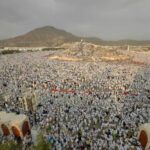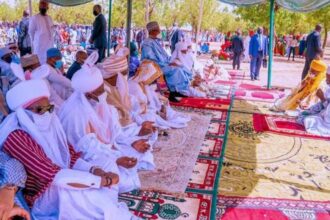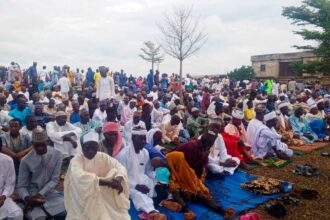


LAGOS — Across Nigeria on Wednesday, May 27, the familiar sounds of Eid al-Adha filled the air. Morning prayers drew millions of Muslims to open grounds in cities and villages from Maiduguri to Lagos. The smell of roasting meat drifted through neighbourhoods. Families dressed in their finest clothes. Children received gifts. Friends and neighbours shared plates of ram, cow, and goat meat across religious and ethnic lines.
The Hausa greeting Barka da Sallah, which means blessed Eid prayers, echoed across northern Nigeria. In Yorubaland, families said E ku Ileya, the traditional Yoruba Eid greeting. In Igbo communities across the midwest and southeast, Muslim neighbours were welcomed to share in the festivities. Eid al-Adha in Nigeria has always been a moment that transcends the religious boundaries it originated within.
In Lagos, where millions of Muslims live alongside a large Christian population, the festival created scenes of genuine inter-faith warmth. Christian neighbours received parcels of meat from their Muslim friends and family. Churches in Muslim-majority areas of Surulere, Agege, and Mushin saw their Muslim neighbours pass by in celebration. Social media was filled with cross-community goodwill messages.
Related News
Food was central to the celebrations. Beyond the sacrificial meat, Nigerian Sallah tables featured jollof rice, fried rice, puff-puff, chin-chin, meat pies, and an abundance of drinks. In northern states, tuwo shinkafa with miyan kuka, a traditional baobab leaf soup, is the quintessential Sallah meal. In the southwest, egusi soup and pounded yam anchored many Ileya feasts.
Economic Realities Temper Festivities
However, the celebrations took place against a backdrop of economic hardship that tempered the festivities for many families. Ram prices hit record highs this year, with medium-sized animals selling for N200,000 to N450,000 in major markets. Many families said they bought smaller animals than they would have liked or chose not to slaughter at all, relying instead on meat shared by neighbours and relatives.
Related News
Market traders said the economic pressure on buyers was palpable. Many customers who would normally spend significant sums on multiple animals for the celebration arrived this year with much smaller budgets. Some traders reported lower sales volumes than previous years despite higher per-unit prices.
Religious leaders addressed the economic reality directly in their Eid sermons. The Sultan of Sokoto and imams across the country reminded worshippers that the spiritual significance of Eid al-Adha lies in the act of sacrifice and the spirit of giving, not in the size or cost of the animal. They said sharing what one has, however little, fulfils the true meaning of the festival.
Sallah and Nigerian Identity
Eid al-Adha, known locally as Eid el-Kabir or Sallah depending on region, is one of the cultural pillars of Nigerian life. Like Christmas and Easter for Christians, it marks a moment when the country slows down, families gather, and the ties that bind communities together are renewed and strengthened.
The inter-faith generosity that characterises Nigerian Sallah celebrations is one of the country’s most admirable cultural traditions. In a country often described through the lens of its divisions, Sallah day demonstrates that ordinary Nigerians across religious lines know how to share, celebrate, and build community together.
As the day wound down and families retired to their homes full of food and fellowship, Nigeria was, for a moment, simply itself, diverse, complicated, warm, and deeply human. Barka da Sallah to all who celebrated. And to all Nigerians, regardless of faith, the gift of a day when the best of what the country can be was on full display.