

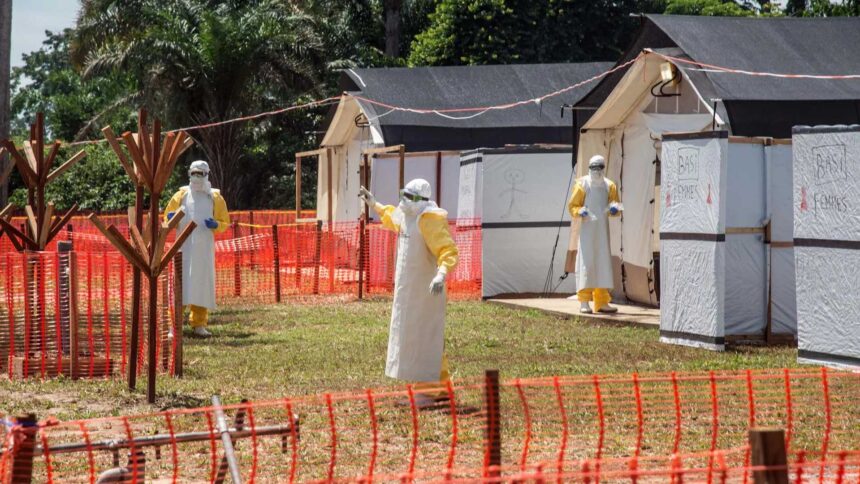
KINSHASA — The Ebola outbreak in the Democratic Republic of Congo has escalated dramatically. The total number of suspected cases has risen to 867, with at least 204 deaths confirmed. The situation worsened significantly on May 23 when 18 suspected Ebola patients escaped a treatment centre in Mongbwalu after local residents attacked and burned a tent at the facility.
Ebola.fyi, a real-time outbreak tracker, confirmed the escaped patients as of Monday. Health authorities said the escape poses an extreme containment challenge. All 18 individuals had been in contact with confirmed Ebola cases and were considered high-risk. Contact tracers are actively working to locate and isolate them.
A medical expert working with a humanitarian organisation in Ituri Province described the situation in stark terms. Dr. Richard Kojan, a clinician with Alima who has experience in multiple Ebola outbreaks, told reporters: “The outbreak is out of control.” His assessment reflects the growing alarm among responders on the ground.
Related News
The attack on the treatment centre in Mongbwalu reflects a broader problem of community resistance to Ebola response efforts in conflict-affected areas of the DRC. Armed groups, community mistrust of health authorities, and displacement have all severely hampered containment operations in Ituri Province.
Outbreak Started Earlier Than Known
New information has emerged suggesting the outbreak began earlier than initially reported. Three Red Cross volunteers who were infected while conducting body management in Djugu on March 27, 2026, are now believed to be among the first known victims. All three died in May.
Related News
This earlier start date means the virus had been circulating in the community for almost seven weeks before health authorities were formally notified and began containment operations. That gap in detection allowed the virus to spread more widely than would have been possible with earlier intervention.
Furthermore, nearly one in three schools in Bunia, Nizi, and Nyankunde now have a suspected Ebola case or close contact, according to ActionAid. Ituri Province has implemented new restrictions banning funeral wakes, requiring burials by specialist teams only, prohibiting civilian transport of dead bodies, and capping gatherings at 50 people.
Nigeria’s Alert Status
Nigeria’s NCDC has maintained its elevated alert level since the outbreak began. Officials confirmed on Monday that surveillance has been intensified at all major airports and land border crossings. As of Tuesday, Nigeria still has no confirmed Ebola cases.
However, health experts are increasingly concerned about the outbreak’s trajectory. With over 867 suspected cases and an active escape incident, the risk of the virus spreading beyond the current DRC and Uganda hotspots is growing. Health authorities worldwide are watching Nigeria closely given its role as West Africa’s most connected air hub.
The WHO said it is sending additional technical teams and supplies to affected areas in DRC. It also called on all countries to strengthen their preparedness, particularly those with air connections to DRC and Uganda. The organisation said the window for successful containment is narrowing and that a scaled-up global response is urgently needed.