

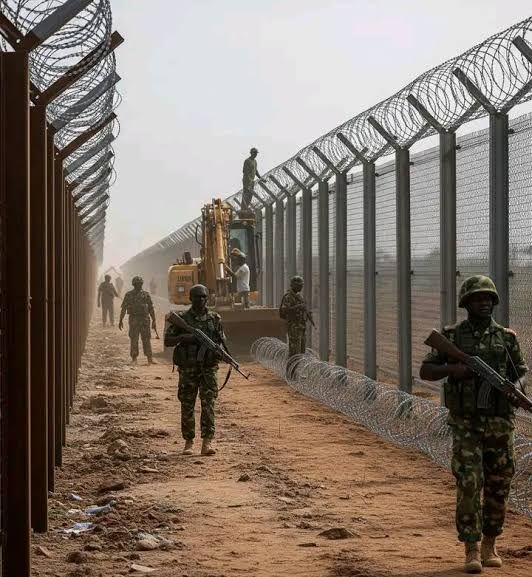
Nigeria, Cameroon, Chad and Niger have reached a landmark security agreement that will allow troops to pursue terrorists and armed criminals up to five kilometres across shared borders, a move aimed at closing escape routes often used by insurgents.
The agreement, announced by Christopher Musa, Nigeria’s Minister of Defence, is expected to strengthen regional efforts against Boko Haram, ISWAP and other armed groups operating around the Lake Chad Basin. The arrangement will enable security forces to maintain pressure on fleeing suspects who attempt to evade arrest by crossing into neighbouring countries.
For communities living along the borders of the four countries, the decision offers renewed hope for improved security. For years, residents in these areas have endured attacks and disruptions linked to criminal groups that exploit porous borders to avoid military operations.
Related News
According to Christopher Musa, the new framework is designed to improve operational coordination among participating countries and deny terrorists the opportunity to use international boundaries as shields against law enforcement actions.
The Defence Minister also disclosed that Nigeria is receiving real-time intelligence, satellite imagery and training support from the United States to strengthen its counterterrorism campaign and enhance military effectiveness.
He further revealed that Nigerian troops recently recorded successes against terrorist and bandit groups during operations in the North-East and North-West, where several commanders were neutralised.
Related News
Security cooperation has become increasingly important in the Lake Chad region, where insurgent groups operate across national boundaries and often take advantage of difficult terrain and limited border controls. The latest agreement is expected to boost intelligence sharing and strengthen collective responses to threats that affect all four countries.
Cameroon’s Far North Region remains one of the areas facing persistent threats from Boko Haram and ISWAP activities, making closer collaboration among neighbouring countries critical to improving security in the region.
While the agreement has been welcomed as a major step in regional counterterrorism efforts, details on operational procedures, rules of engagement and measures to protect civilians have not yet been made public.
The deal underscores a growing commitment among the four countries to confront terrorism through joint action, ensuring that national borders no longer serve as easy escape routes for armed groups threatening peace and stability across the region.