

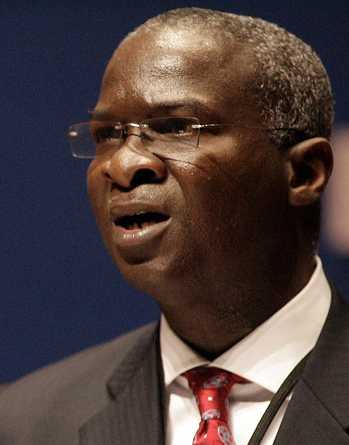
Former Minister of Works and Housing, Babatunde Fashola, has questioned the practicality of Atiku Abubakar’s promise to restore fuel subsidy, arguing that the proposal does not adequately address the realities facing Nigeria’s oil sector.
Speaking during an appearance on Channels Television’s Politics Today, Fashola said the debate should focus on the policy itself rather than the personality behind it. He maintained that any plan to bring back subsidy must first explain how Nigeria would secure enough crude oil to sustain the system.
According to the former Lagos State governor, Nigeria is still grappling with challenges such as crude oil production constraints, pipeline vandalism and insecurity. He argued that these issues make it difficult to guarantee the steady supply needed for a subsidy regime.
Related News
“The proposal is not realistic,” Fashola said, stressing that supporters of the policy must present clear evidence showing how it can be implemented successfully. He warned that promises without detailed plans could leave Nigerians facing the same difficulties that previously surrounded fuel subsidy programmes.
Fashola also raised questions about the apparent shift in Atiku’s position. He noted that during the 2023 election cycle, major presidential candidates supported the removal of fuel subsidy and suggested that voters deserve an explanation on what has changed since then.
Beyond the issue of crude oil supply, the former minister argued that restoring subsidy would require more than executive action. He said any return to the policy would likely need legislative backing and broader consensus on how it would be funded.
Related News
Another concern highlighted by Fashola is the potential impact on state finances. He recalled that, under the previous subsidy regime, states received smaller allocations from the federation account. A return to that system, he warned, could place renewed pressure on state governments already struggling to meet development and social obligations.
Atiku, the presidential candidate of the African Democratic Congress (ADC), has pledged to restore fuel subsidy if elected in 2027, arguing that the removal of the subsidy has worsened economic hardship for many Nigerians.
The issue remains one of the most sensitive topics in Nigeria’s political and economic landscape. While critics of subsidy removal point to rising living costs and transport fares, supporters argue that ending the policy frees up public funds and reduces pressure on government finances.
With political campaigns gradually gathering momentum ahead of the 2027 elections, the debate over fuel subsidy is expected to remain at the centre of discussions about economic recovery, public welfare and the future direction of Nigeria’s energy policy.