

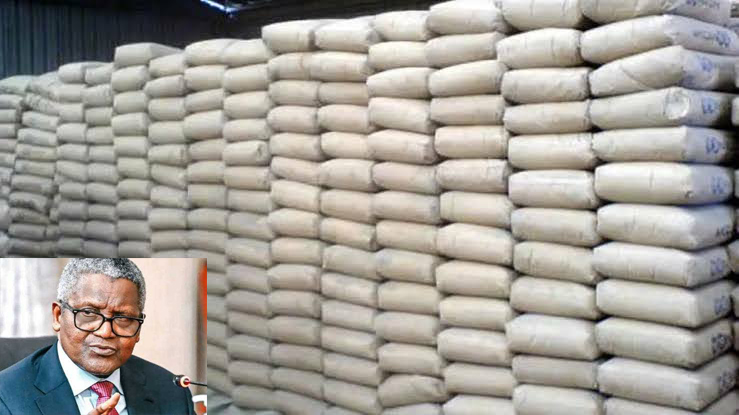
The Federal Competition and Consumer Protection Commission (FCCPC) has revealed that Nigerians are paying significantly higher prices for cement compared to citizens of neighbouring African countries.
The Commission made this known during a recent market review, noting that cement prices in Nigeria remain among the highest in West Africa despite local production capacity.
According to the FCCPC, the pricing disparity is linked to limited competition in the sector and rising production costs. Officials explained that while Nigeria has major cement manufacturers, the market structure has allowed prices to remain elevated compared to countries with similar or smaller production capacity.
Related News
Dr. Adamu Abdullahi, Acting Executive Vice Chairman of the FCCPC, said the Commission is closely monitoring the industry to ensure fair competition. “We have observed that Nigerians pay more for cement than their neighbours. This raises questions about market practices and affordability for consumers,” he stated.
The Commission stressed that cement is a critical product for housing and infrastructure development, and high prices directly affect construction costs across the country. Analysts warn that this situation could slow down housing delivery and increase the financial burden on small-scale builders.
Industry experts also point to challenges such as energy costs, transportation, and foreign exchange pressures as factors driving up local prices. However, they argue that these challenges are not unique to Nigeria, making the price gap with neighbouring countries more concerning.
Related News
The FCCPC has assured that it will continue to engage with cement producers and stakeholders to address pricing concerns. The Commission emphasized that its role is to protect consumers and ensure that markets operate fairly without anti-competitive practices.
Civil society groups have welcomed the FCCPC’s intervention, urging the government to take stronger steps to regulate the sector. They argue that affordable cement is essential for tackling Nigeria’s housing deficit and supporting infrastructure growth.
For many Nigerians, the rising cost of cement has made building projects more difficult. Small contractors and individual home builders say they are forced to reduce project sizes or delay construction due to high expenses.
The FCCPC’s findings highlight the need for broader reforms in Nigeria’s construction industry, including improved competition, better infrastructure for distribution, and policies that reduce production costs.
As discussions continue, Nigerians hope that regulatory action will lead to fairer pricing and greater access to affordable building materials.