


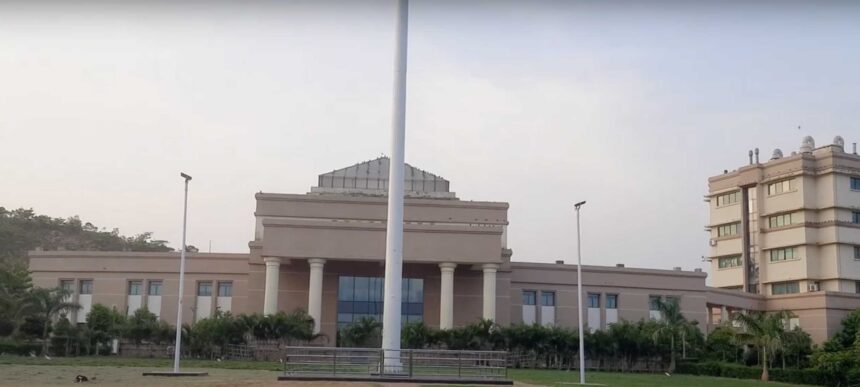
ABUJA — The Nigerian Institute of Social and Economic Research has released an optimistic medium-term economic outlook for Nigeria. NISER said the country’s economy is on track for sustained recovery and forecast that inflation will drop to single digits within the next 18 months. The institute cited President Tinubu’s economic reforms, improved non-oil revenue, and the impact of the Dangote Refinery as key drivers of the positive trend.
NISER Director-General Prof. Antonia Simbine presented the findings at a press conference in Abuja on Monday. She said the institute’s research team reviewed a range of economic indicators over the past 18 months and concluded that Nigeria’s economic trajectory has improved materially since the painful reform period of 2023 and 2024.
“Our medium-term outlook is cautiously optimistic. The fundamentals are improving. Oil production is up. The naira has stabilised. Non-oil revenue is growing. And the Dangote Refinery is beginning to show real macroeconomic impact,” Simbine said at the briefing.
Related News
NISER projected GDP growth of between 4.2 and 4.8 percent in 2026, up from 3.4 percent in 2025. The institute said growth is being driven by a combination of improved agricultural output, expansion in the services sector, and stronger manufacturing activity as the naira stabilises.
Inflation Outlook
On inflation, NISER said the headline rate, which peaked above 34 percent in early 2025, has been declining steadily. The institute projected it would fall to the high teens by the end of 2026 and to single digits by mid-2027 if current monetary policy settings are maintained.
Related News
The CBN’s tight monetary policy, including an interest rate held at 27.5 percent, has played a significant role in reducing money supply growth and curbing inflationary pressure. NISER said the bank should maintain this stance even as political pressure ahead of 2027 elections may push for rate cuts.
Furthermore, food inflation remains the most stubborn component. Insecurity disrupting farming in the northwest and northeast continues to reduce agricultural output in some of Nigeria’s most productive regions. NISER said addressing food inflation requires both monetary discipline and improved security in farming communities.
Risks to the Outlook
Despite the positive overall picture, NISER identified several risks. Global oil price volatility, driven by the ongoing Iran conflict and uncertain demand from China, could reduce Nigeria’s export revenues. The government’s large borrowing requirements also create debt servicing pressure that could crowd out spending on critical public services.
The 2027 election cycle is another risk factor. Governments across the world tend to loosen fiscal policy ahead of elections to boost public support. If Nigeria’s government increases spending significantly in the run-up to 2027, it could reverse some of the inflationary gains achieved over the past 18 months.
NISER said Nigeria must accelerate structural reforms in infrastructure, education, and governance to sustain medium-term growth. The institute called on both federal and state governments to improve the investment climate, strengthen institutions, and invest aggressively in human capital development.