

The message is direct. Fund your health workers, or pay a much higher price later.
The Nigeria Centre for Disease Control and Prevention has issued a formal appeal to state governors across the country, urging them to increase funding for health workers as part of Nigeria’s efforts to prevent the Bundibugyo strain of Ebola from entering the country. The appeal, signed by NCDC Director-General Dr Jide Idris, highlights a gap between federal public health policy and state-level implementation that experts say must close urgently.
The Bundibugyo Threat
Related News
The current Ebola outbreak in Central and East Africa is caused by the Bundibugyo strain, a variant with a case fatality rate of between 25 and 35 per cent. The outbreak began in the Democratic Republic of Congo’s Ituri province and has since spread to Uganda, which has closed its borders with the DRC. As a result, the risk of the virus travelling through the region, and potentially into Nigeria through porous land borders, is classified as high.
Nigeria’s NCDC DG Dr Jide Idris has already admitted publicly that the country’s preparedness stands at only 59 per cent. He explained that no country can ever be 100 per cent ready. However, he stressed that the gap between current readiness and what is needed must be urgently addressed, and that governors hold a key piece of that solution.
Why Health Worker Funding Matters
Related News
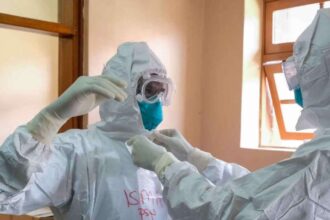
Health workers are the first line of Ebola defence. They are the people who identify suspected cases, isolate patients, collect samples, and trigger the response chain that can stop an outbreak before it spreads. However, across many Nigerian states, health workers face delayed salaries, poor equipment, and inadequate training.
Furthermore, 39 healthcare workers have already been infected during the current Lassa fever outbreak in Nigeria, including physicians. Some have died. That figure is a stark reminder of what happens when the health system is under-resourced. Consequently, the NCDC’s appeal to governors is not simply bureaucratic, it is urgent.
What the Federal Government Is Doing
The Federal Government has intensified Ebola screening at international airports and ordered isolation protocols for high-risk travellers. Lagos, Abuja, and 19 other states have been placed on heightened surveillance. The NCDC has expanded laboratory capacity and is distributing emergency preparedness materials to high-risk states.
Dr Idris, addressing a press briefing in Lagos, was reassuring but honest. “If Ebola comes into Nigeria, we will stop it with the current knowledge and systems we have now,” he said. However, he made clear that the best outcome is to stop it at the door, and for that, governors must act.