


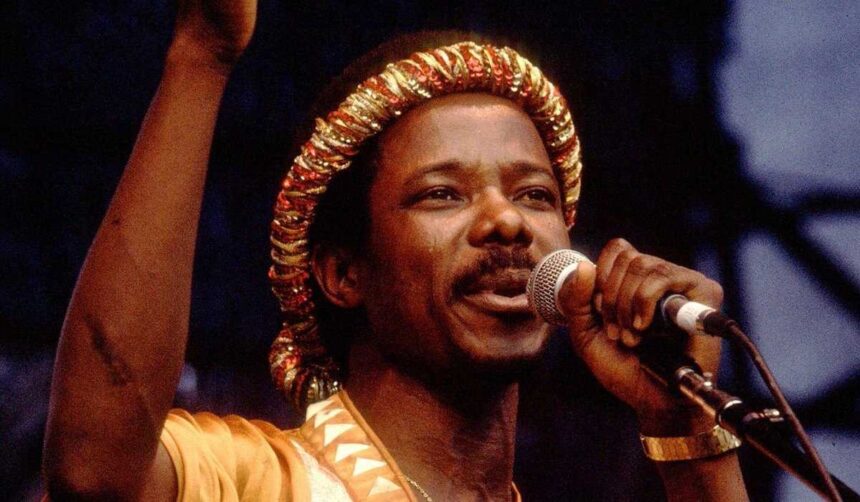
LAGOS — Before Afrobeats went global, one man made the world stand up and dance to Nigerian music. King Sunny Ade changed everything. From seated orchestras to electrifying stage performances, the juju legend carried Nigerian sound to audiences across the world decades before today’s superstars were born.
The Guardian Nigeria published a landmark profile of the music icon this week. The feature celebrates his contributions to Nigerian music and his role as a true pioneer of African sound on the global stage.
King Sunny Ade, born Sunday Adeniyi Adegeye in 1946, rose to fame in the 1960s and 1970s as the crown prince of juju music. His African Beats band transformed what had been a small-scale local genre into a sophisticated, high-energy performance art that could fill concert halls in Europe and America.
Related News
His 1982 album Juju Music, released internationally on Island Records, introduced Nigerian sound to a Western audience on an unprecedented scale. It was nominated for a Grammy Award. At the time, that was a historic milestone for African music.
The Legacy He Built
King Sunny Ade’s influence on Nigerian music stretches far beyond his own recordings. He demonstrated that Nigerian artists could achieve international success without compromising their cultural identity. His success opened doors that later artists including Fela Kuti, Youssou N’Dour, and today’s Afrobeats superstars walked through.
Related News
In addition, his approach to performance set standards that still influence Nigerian musicians today. His shows were known for their energy, audience engagement, and musical complexity. He could hold a stage for hours, moving seamlessly between traditional juju rhythms and contemporary arrangements.
Furthermore, his work has been cited as an influence by global artists across genres. American funk musicians, British pop producers, and Brazilian samba artists have all acknowledged the role that African rhythmic traditions, particularly those popularised by King Sunny Ade, played in shaping their own music.
Still Relevant Today
King Sunny Ade remains active in Nigerian music. He continues to perform and record. His presence at industry events draws deep respect from younger artists who recognise what he built and what it cost to build it at a time when African music had almost no international platform.
Burna Boy and Shakira recently released the FIFA World Cup 2026 official anthem together. That collaboration represents the latest chapter in the story that King Sunny Ade helped begin. The journey from Lagos nightclubs in the 1960s to a FIFA World Cup stage in 2026 is one of the most remarkable arcs in music history.
The Guardian’s profile ends with a simple observation: King Sunny Ade did not wait for the world to come to Nigeria. He took Nigeria to the world. That spirit, experts say, is the foundation on which everything Nigeria’s music industry has built since then rests.