

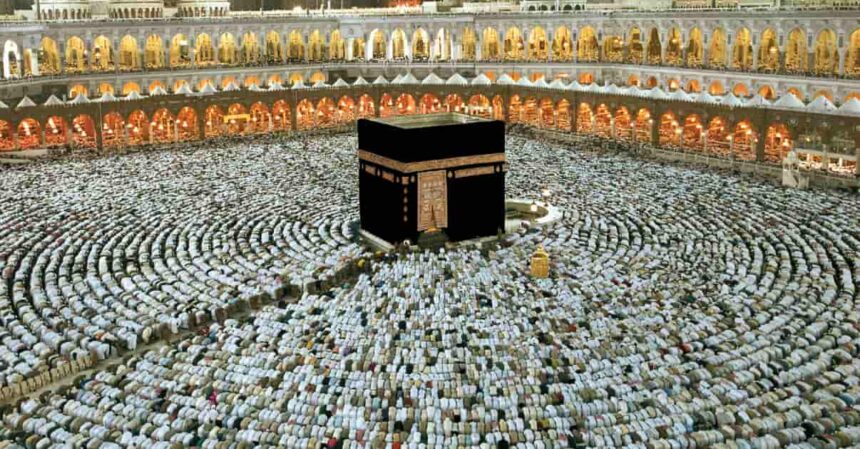
JEDDAH — Hajj Malam Haruna Aliyu had saved for 11 years to go to Mecca. He sold his motorcycle. He sold two of his cattle. He contributed to a cooperative with neighbours. When he finally boarded the plane from Kano to Jeddah this May, he cried with gratitude. He thought the hardest part was behind him. He was wrong.
Haruna is one of dozens of Kano State Hajj pilgrims whose experience in Saudi Arabia has been marked by delays, food shortages, and a Nusuk card that does not work. The Nusuk card is the digital identification system Saudi authorities introduced for pilgrims to access services, sites, and transport during the Hajj. For many Nigerian pilgrims, the card has been more frustration than help.
“My card does not work. I went to the tent for food and they scanned my card and it said invalid. I was hungry and standing there unable to eat. A Saudi volunteer finally gave me something from a personal supply. That should not happen to someone who paid the full Hajj price,” Haruna said in a phone call with his wife in Kano.
Related News
Kano State Government expressed serious concern on Friday, May 29, about the welfare conditions its pilgrims are experiencing in Saudi Arabia. A state government spokesman said Kano has received multiple complaints from pilgrims about delays in accommodation, food distribution problems, and Nusuk card failures. NAHCON was asked to respond urgently.
NAHCON Under Fire
The National Hajj Commission of Nigeria promised to investigate the Kano complaints. A spokesperson said the commission is working with Saudi authorities to resolve the Nusuk card issues as quickly as possible. However, the spokesperson acknowledged that the digital system has experienced problems for some Nigerian pilgrims.
Related News
NAHCON’s response has not satisfied the Kano State Pilgrims Welfare Board, which oversees the state’s delegation. The board said complaints have been piling up for days without adequate resolution. It said pilgrims who paid significant sums to undertake the Hajj deserve better than administrative failures that leave them hungry and confused in a foreign country.
Furthermore, one Nigerian pilgrim has already died at Muzdalifah, a death that raised broader questions about NAHCON’s readiness for the extreme conditions of the 2026 Hajj. With temperatures exceeding 42 degrees Celsius and logistical challenges compounding the physical demands of the pilgrimage, the welfare of Nigerian pilgrims is under serious scrutiny.
Systemic Problems
The Kano Hajj welfare crisis reflects systemic problems in Nigeria’s Hajj management that have persisted for years. Coordination between NAHCON, state pilgrims welfare boards, and Saudi authorities is frequently inadequate. Digital systems like the Nusuk card are introduced without ensuring that all pilgrims and Hajj coordinators are properly trained to use them.
Haruna said what he wants most is to complete the Hajj in peace and return home safely. He says the problems are frustrating but he refuses to let them take away the spiritual meaning of a journey he waited 11 years to make. “I am in Mecca. I have prayed at the Kaaba. No broken card can take that away from me,” he said.
His resilience is admirable. But his experience is a reminder that the millions of naira Nigerian pilgrims spend on the Hajj should purchase a dignified and properly supported pilgrimage. NAHCON owes them that. And the Kano State Government is right to hold the commission accountable.