

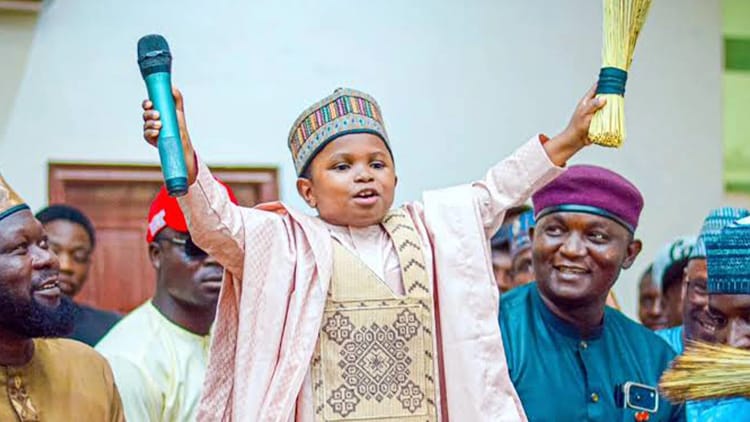
ABUJA — He had the forms. He had the fees. He had a party willing to let him run. But Mahmud Sadis Buba, who claimed to be 30 years old and was seeking an APC ticket for a House of Representatives seat, stepped down from the race this week after observers raised serious concerns that he might actually be 15 years old.
The story broke on social media when photographs of the aspirant circulated widely. Observers noted that his physical appearance seemed inconsistent with the age he had declared. Several people who claimed to know him personally said he was still a teenager. The story went viral immediately.
Buba has not publicly confirmed or denied his actual age. He did not respond to press enquiries. His stepping down came without a formal statement explaining the reason. The APC, which had already screened him, faces questions about how such a candidate could have passed eligibility checks.
Related News
Under Nigerian law, candidates for the House of Representatives must be at least 25 years old. A 15-year-old would be ineligible by a decade. The incident raises serious questions about how political parties verify the age and identity of aspirants before granting them access to primary elections.
A Symptom of Weak Party Systems
Election experts say the Buba case, while extreme, reflects a broader problem with how Nigerian political parties manage their internal processes. Screening committees rely largely on documents submitted by aspirants. Physical verification, cross-referencing with national identity databases, or independent age verification are rarely done.
Related News
Furthermore, the APC’s nationwide primary exercise has already produced multiple controversies, including disputed results, parallel outcomes, and disqualified candidates in several states. The apparent near-miss of an underage candidate adds to a long list of quality control failures.
INEC has not made any formal statement on the Buba case. However, the commission has the power to disqualify candidates whose submitted information is found to be false at any point before or after the election. If Buba had been nominated and won, he could have faced disqualification proceedings.
The Deeper Question
Beyond the legal issue, the story raises a human question. Who is Mahmud Sadis Buba, and how did he come to be seeking elected office at what appears to be such a young age? Was he self-motivated? Was he put forward by political patrons? Was he used as a placeholder by adults who intended to control his decisions if he won?
Child rights advocates said the case could indicate that the teenager was being manipulated by adults with political interests. They called on the relevant authorities to investigate whether any exploitation of a minor occurred during the primary process.
For now, Buba has stepped down and the story has faded from the primary news cycle. But it serves as a striking example of how far Nigeria’s political recruitment processes still need to develop to become truly fit for purpose.