

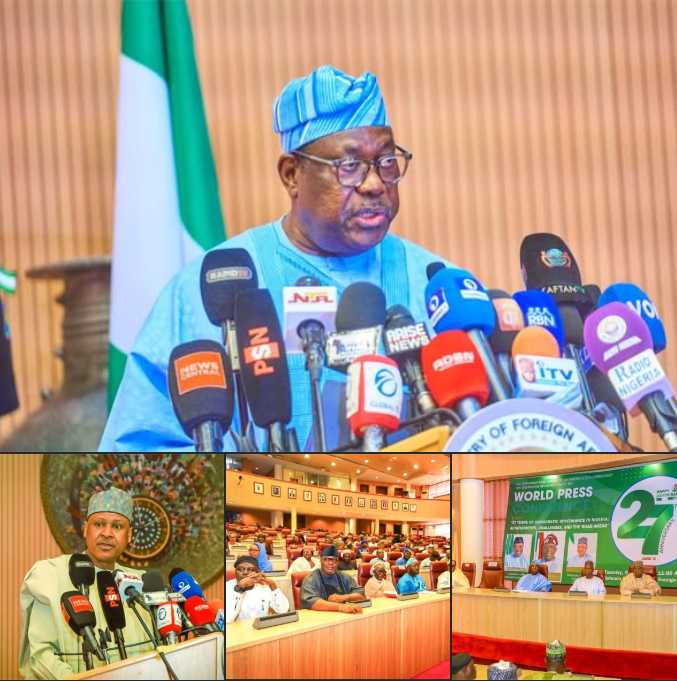
The federal government used its 2026 Democracy Day press conference to mount a comprehensive defence of the Tinubu administration’s three-year reform record, presenting what officials described as measurable achievements in security, economic management, social welfare delivery, and anti-corruption enforcement that they said were moving Nigeria in the right direction.
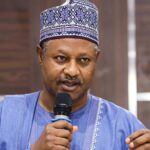
Information Minister Mohammed Idris, speaking in Abuja on Tuesday, June 10, 2026, said the Democracy Day celebration this year held special significance because it coincided with the third anniversary of the Renewed Hope Administration. He said the administration had undertaken difficult but necessary structural changes that had disrupted short-term comfort in exchange for long-term stability and growth.
Secretary to the Government of the Federation George Akume separately highlighted that the NGX had crossed the historic N100 trillion market capitalisation mark, that Nigeria’s external reserves were approaching $50 billion, and that the EFCC had recovered over N50 billion channelled into the National Education Loan Fund. ‘This administration wishes to let all recognise the fact that Nigeria is a huge viable project and it is work in progress,’ Akume said, acknowledging that not every challenge had been resolved.
Related News
Opposition Challenges the Narrative
However, opposition politicians delivered a starkly different assessment of the three-year record. Former Labour Party vice-presidential candidate Datti Baba-Ahmed said northern Nigeria was deeply displeased with the Tinubu administration over insecurity, poverty, and governance failures that he argued were hitting ordinary northerners the hardest. The PRP, the Labour Party, and the ADC all issued statements framing the Democracy Day anniversary as an occasion for accountability rather than celebration.
Furthermore, civil society organisations including the Socio-Economic Rights and Accountability Project published a shadow report challenging several of the government’s claims, arguing that improvements in headline economic indicators had not translated into reduced poverty or improved living standards for the majority of Nigerians. The report said inflation, while declining from its peak, remained elevated and that real wages had not kept pace with the rising cost of essential goods and services.
Related News
Still, the government maintained that the reforms were producing results that would compound positively over time. Notably, the IMF’s projection of 4.1 per cent economic growth for Nigeria in 2026, S&P’s credit rating upgrade, and the NGX market cap milestone provided independent support for the government’s economic narrative. Consequently, the Democracy Day conversation across Nigeria reflects the deep polarisation between those who see the reforms as a necessary but painful transition and those who argue that the pain has been distributed unfairly and the benefits have yet to arrive.
Tinubu to Deliver Nationwide Broadcast
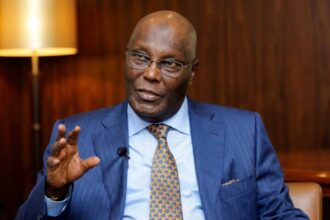
In addition to addressing the National Assembly on June 12, President Tinubu is expected to deliver a live nationwide broadcast in which he is expected to speak directly to Nigerians about security, the economy, and his administration’s plans for the remaining two years of his term. As a result, June 12, 2026 will serve as both a ceremonial milestone and a significant political moment that could shape the contours of the 2027 election narrative.