


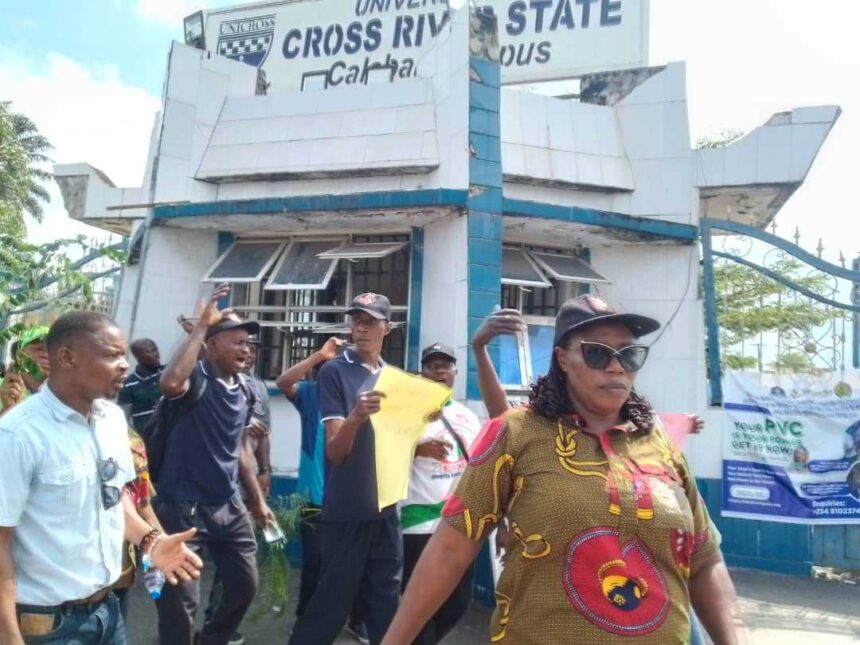
The Academic Staff Union of Universities (ASUU) at the Cross River University of Technology (CRUTECH) has resumed strike action over unpaid salary arrears, reigniting concerns about the fragile state of Nigeria’s higher education system.
The union announced its decision after months of unresolved negotiations with the state government, citing accumulated salary arrears and poor welfare conditions as the core grievances.
Lecturers Cry Out Over Unpaid Wages
According to ASUU leaders in the institution, many lecturers have endured months without pay, a situation they described as “unsustainable and dehumanizing.” They stressed that the strike was not merely about money but about dignity and fairness in the workplace.
Related News
“We cannot continue to teach on empty stomachs. Our members deserve their wages, and our students deserve quality education delivered by motivated lecturers,” one union representative said.
Students Bear the Brunt
The strike has left thousands of students stranded, with academic calendars disrupted yet again. Many expressed frustration, noting that repeated strikes have delayed graduation timelines and affected career plans.
“I was supposed to finish my degree last year, but the constant strikes keep pushing everything forward. It feels like our future is on hold,” lamented a final-year student.
Related News
Parents and guardians also voiced concern, highlighting the financial and emotional toll of prolonged academic interruptions.
Government
The Cross River State Government has acknowledged the arrears but insists it is working within limited resources. Officials argue that the state’s revenue challenges have made it difficult to meet all financial obligations promptly.
However, ASUU maintains that the government must prioritize education, warning that neglecting lecturers’ welfare will only worsen Nigeria’s already struggling academic system.
A Familiar Pattern in Nigeria’s Education Sector
This latest strike echoes a recurring theme in Nigeria’s universities, where disputes over salaries, funding, and infrastructure often lead to prolonged shutdowns. National ASUU strikes in recent years have paralyzed institutions across the country, leaving students and parents in despair.
Education experts warn that frequent disruptions erode the quality of learning and diminish Nigeria’s competitiveness globally. “Every strike is a setback for the nation. We cannot build a strong economy if our universities remain unstable,” one analyst noted.
Call for Dialogue and Lasting Solutions
Stakeholders are urging both the government and ASUU to return to the negotiation table. Civil society groups have appealed for compromise, stressing that the future of young Nigerians should not be sacrificed on the altar of unresolved disputes.
The union insists that the strike will continue until concrete steps are taken to clear arrears and improve working conditions.
At its core, the strike reflects a deeper struggle for respect and recognition. Lecturers argue that their role in shaping future leaders must be valued, while students plead for stability to pursue their dreams.
As the strike drags on, the question remains: will Nigeria find a sustainable way to balance the welfare of its educators with the realities of governance?
For now, classrooms at CRUTECH remain empty, and the silence is a stark reminder of the urgent need to fix Nigeria’s education system.