


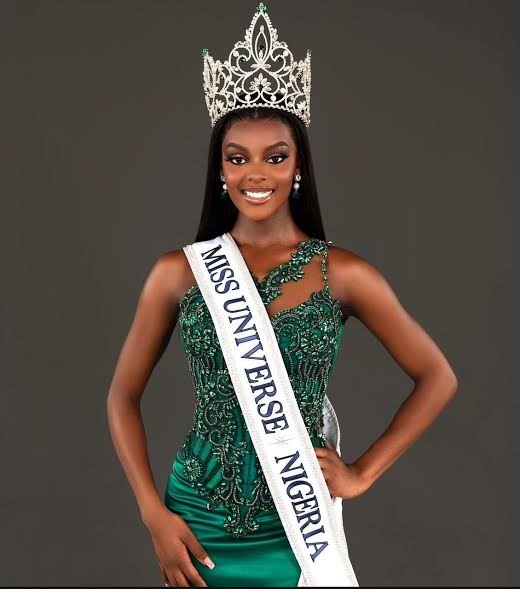
Chidimma Adetshina dazzled on the Miss Universe stage. Now she is fighting deportation in a Cape Town courtroom — and her story has become the mirror Africa didn’t want to look into.
She stood under the lights in Mexico City in November 2024, crown on her head, the Miss Universe Nigeria sash across her chest, the roar of a global audience rising around her. Chidimma Vanessa Adetshina had just finished first runner-up at the Miss Universe pageant — the highest any Nigerian titleholder had placed in years. Nigeria celebrated. Social media erupted. A young woman born in Soweto, raised in Cape Town, had carried the green-white-green flag to the world’s biggest beauty stage and made it mean something.
Related News
Eighteen months later, South Africa wants her gone.
Adetshina, 25, appeared before the Cape Town Regional Court on June 9 after immigration officials arrested her at her home in the Summer Greens area of Cape Town. She was released on warning and is due back in court on July 16 as South Africa’s Department of Home Affairs pursues formal deportation proceedings. Her minor son, whose legal status is tied directly to hers, faces the same fate.
The charges are not about a crown or a sash. They are about where, exactly, a young woman born on South African soil legally belongs — and the answer, according to Pretoria, is not here.

A Story That Started Before She Was Famous
To understand how Chidimma Adetshina ended up in a Cape Town courtroom, you have to go back further than the pageant lights.
She was born in Soweto to a Nigerian father, who holds permanent residency, and a mother of Mozambican origin. She grew up in Cape Town. She spoke the languages. She lived the life. As far as Chidimma was concerned, she was South African — until 2024, when a beauty pageant exposed just how many South Africans disagreed.
When her name appeared on the Miss South Africa 2024 finalist list, the backlash was immediate and ugly. Questions about her citizenship flooded social media. South Africa’s then-Minister of Sports, Arts, and Culture publicly questioned whether someone with Nigerian heritage could represent the country. Her ‘Nigerian-ness’ became the entry point through which people online made her the newest face of a cultural war — something no other contestant, not even one of Congolese origin, was subjected to.
Home Affairs investigated and found preliminary evidence of potential identity fraud linked to her mother’s acquisition of South African citizenship. Her mother, Anabela Rungo, was later arrested in 2025 for allegedly violating the Immigration Act and the Identification Act. Chidimma withdrew from Miss South Africa, citing safety concerns. Nigeria’s Miss Universe organisation stepped in, invited her to compete, and the rest — the crown, the Mexico stage, the global headlines — followed.
But the legal storm followed too.
What the Court Papers Say
Back in March, Home Affairs Minister Leon Schreiber rejected Adetshina’s bid to challenge the department’s refusal to issue her a letter of good cause — a formal pardon that would have allowed her to regularise her stay despite past violations. Schreiber laid out a detailed timeline: the department had warned Adetshina in September 2024 that it intended to cancel both her and her son’s South African identity documents, but she never responded before the deadline passed.
He further alleged that she obtained a Nigerian passport before applying for a South African visitor’s visa, which was rejected after officials claimed she submitted a fraudulent bank statement — a decision she reportedly never contested. By December 19, 2024, she had been formally declared a prohibited person under South African immigration law.
Authorities allege she later re-entered South Africa through the Lebombo border post from Mozambique while presenting herself as a South African citizen.
Immigration officer Adrian Jackson, in a court affidavit, stated that after conducting a status determination interview and cross-checking her details against the Department of Home Affairs’ electronic systems, it was confirmed that she does not hold any lawful residential status in South Africa and is thus an illegal foreigner — one who, in his submission, wilfully and intentionally remained resident unlawfully in contravention of the Immigration Act.
Adetshina’s legal team has pushed back, launching a court challenge to halt her removal while the case is heard. The next hearing is July 16.
The Bigger Fire Burning Behind This Case
Chidimma Adetshina is one person. But her story sits inside a much larger and more dangerous one.
At least two Nigerian men died in April during the latest wave of xenophobic violence in South Africa. Amaramiro Emmanuel was killed after being beaten by officers from the South African National Defence Force on April 20. Ekpenyong Andrew was arrested in Pretoria and later found dead at a mortuary.
Nigerian Foreign Minister Bianca Odumegwu-Ojukwu publicly accused South Africa’s government of failing to forcefully denounce violence against Nigerian nationals, saying the situation had damaged the bond both countries built during Nigeria’s solidarity with South Africa’s anti-apartheid struggle.
The Nigerians in Diaspora Commission, NiDCOM, warned in April that the situation on the ground is deteriorating — that Nigerians are increasingly living in fear with daily activities severely disrupted — and expressed disappointment that earlier diplomatic efforts between both governments had not yielded the expected calm.
South Africa’s government has insisted the violence represents isolated pockets of protest, not state-sanctioned xenophobia. Many Nigerians — and many analysts — do not accept that framing.
Nigeria’s Minister of State for Foreign Affairs said it plainly in her May 7, 2026 call with her South African counterpart: “We will not stand by and watch the systematic harassment and humiliation of our nationals resident in South Africa.”
The Cruelest Irony
There is a line in this story that keeps demanding to be written.
South Africa rejected Chidimma Adetshina because of her Nigerian heritage. The pressure forced her out of the Miss South Africa pageant. She embraced her Nigerian roots, won Miss Universe Nigeria, and finished as first runner-up on the global stage. Had she represented South Africa, that recognition would have belonged to South Africa.
Instead, the country that hounded her out now wants to formally expel her. The country that welcomed her celebrates her. And the young woman at the centre of it all — born on South African soil, raised in Cape Town’s streets, fluent in its languages — sits in legal limbo, waiting for a July courtroom to tell her where she belongs.
Defiant to the End
If Pretoria expected Chidimma Adetshina to disappear quietly, it has not been watching her TikTok.
While keeping a relatively low profile on Instagram, she has been actively clapping back at critics who questioned her illegal status — posting memes in response to those who warned her about the June 30 anti-immigrant deadline, appearing seemingly nonchalant about the storm surrounding her.
The legal stakes on July 16 are anything but nonchalant. Deportation would mean leaving the only country she has ever physically called home, starting over in a Nigeria she represented but did not grow up in, and raising a child whose entire life has been shaped by a citizenship dispute he had no hand in creating.
Whatever the Cape Town Regional Court decides next month, one thing is already settled. Chidimma Adetshina’s story — the girl who dazzled the world, only to be told she does not belong in it — is not a beauty pageant story anymore.
It never really was.
Next court date: July 16, 2026, Cape Town Regional Court.