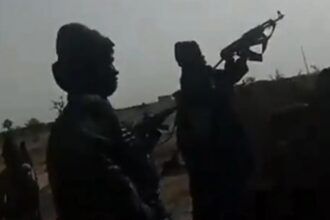



Kontagora – Mr Alaramma had gone to the farm with his elder brother, the way they did most mornings in Kawon Kontagora, a quiet farming village in Niger State’s Kontagora Local Government Area. It was an ordinary day, until armed men emerged from the bush and marched them both away at gunpoint into a world neither of them could have prepared for.
What followed was days spent deep inside a forest hideout controlled by a bandit faction led by a commander known as Dogo Gide, one of several armed groups that have turned stretches of Nigeria’s North-West and North-Central forests into staging grounds for kidnapping operations. For Mr Alaramma and his brother, the ordeal was about to take an even more dangerous turn.
Deep in the bandits’ camp, tensions had been building between Gide’s faction and a separate extremist group known as Lakurawa, active across parts of the North-West and North-Central regions. According to Mr Alaramma, the dispute erupted after Lakurawa fighters demanded Zakat, an Islamic obligatory tax, in the form of cattle from Gide’s men, a demand his captors refused.
Related News
The disagreement escalated into open conflict. “The bandits suffered major losses, which made them incredibly brutal toward us,” Mr Alaramma said, describing how the captors, humiliated by their battlefield losses, turned their anger on the very hostages they were holding for ransom.
His brother, who understands the Fulfulde language spoken by many of the captors, was able to piece together what was happening by eavesdropping on their conversations. He relayed that the bandits believed, wrongly, that their hostages had somehow tipped off the rival group to their location — a suspicion that only deepened the abuse the captives endured in the camp.
“They took their frustrations out on the captives, paranoid that we outsiders had invited the Lakurawa group into the area to track them down,” Mr Alaramma recalled, describing days of fear compounded by the sound of gunfire between the two armed factions battling for territory and dominance over the forest corridor.
Related News
Mr Alaramma’s account offers a rare, first-hand window into a phenomenon security analysts have long warned about: the fragmentation and rivalry among armed groups operating in Nigeria’s ungoverned forest spaces, where competition over resources, tolls and extortion territory increasingly spills over onto the civilians caught in the middle.
Mr Alaramma and his brother were eventually released, joining a wave of recent cases across Niger, Kwara and neighbouring states where victims have regained their freedom after prolonged captivity. His account, corroborated by his brother’s testimony, adds to a growing body of survivor narratives that have helped security agencies map out the shifting rivalries and territorial disputes among armed groups terrorising rural communities.
For Mr Alaramma, freedom has not erased the memory of those days in the forest, caught between two armed factions fighting for control while he and his brother waited, powerless, for the violence to end. He has since returned to his village, where farming remains the only livelihood he knows, even as fear of another attack lingers in a community still bordering some of the most dangerous forest corridors in the region.