

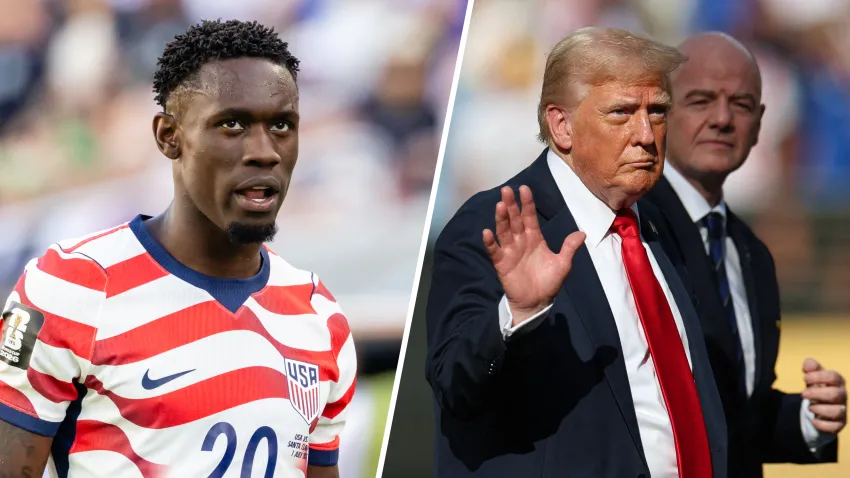
A red card. A phone call. A decision that has shaken football’s foundations. And at the centre of it all is a striker born in Brooklyn to Nigerian parents.
The biggest controversy of the 2026 FIFA World Cup involves Folarin Balogun, a 24-year-old striker of Nigerian heritage who plays for the United States men’s national team. Balogun received a red card against Bosnia-Herzegovina on July 1, which under FIFA rules automatically triggers a one-match ban. However, in a stunning reversal on July 5, FIFA suspended the ban under Article 27 of its disciplinary code, allowing him to face Belgium. US President Donald Trump reportedly called FIFA president Gianni Infantino directly to discuss the matter before the decision was announced.
A Decision That Shocked Football
Related News
The reaction from the football world was immediate and furious. UEFA described the decision as “incomprehensible and unjustifiable,” saying it crossed “a red line” in the game’s disciplinary integrity. Belgium coach Rudi Garcia joked that he did not know July 5 was April Fools’ Day in the United States. The Royal Belgian Football Association said it was “astonished” and investigated all potential options.
Former Manchester United defender Gary Neville said on ITV that the decision “absolutely stinks.” Norway coach Stale Solbakken warned that the manner in which Balogun’s ban was handled was “not a great look” for football governance regardless of Trump’s exact level of influence. Even former FIFA president Sepp Blatter took the high moral ground over Infantino’s decision, a detail that illustrates just how far the controversy has spread.
Who Is Balogun and Why Nigeria Cares
Related News
Folarin Balogun was born on July 3, 2001, in Brooklyn, New York, to Nigerian parents originally from Nigeria but residing in London. His mother had travelled to New York while seven months pregnant and was refused a return flight, which meant Balogun was born with American citizenship by accident of travel.
He went on to represent the United States despite being eligible for Nigeria, England, and the US. He came through Arsenal’s academy, played on loan in France, and eventually committed to the USMNT. He has three goals at this World Cup. For Nigerian football observers, his story is a reminder of how many players of Nigerian heritage are contributing to World Cups that Nigeria itself is not part of.
What Happens Next
Belgium received the right to appeal the suspension of Balogun’s ban. FIFA maintained that its disciplinary committee acted independently, despite Trump publicly thanking Infantino for “reversing a great injustice.” Whether the US beat Belgium or not, as ESPN reporter Colin Udoh noted, Balogun leads a remarkable list of Nigeria-descent performers as the World Cup enters its business end.
The controversy will not die quickly. It has already become one of the defining governance moments of the 2026 tournament, raising questions about whether the rules apply equally to all nations or only to those without access to the world’s most powerful political office.