


Billions of dollars spent. Millions still in darkness. And now, another multi-billion dollar plan on the table.
Nigeria is planning to invest an additional $11 billion in solar energy infrastructure as part of a renewed push to address its chronic electricity crisis. The announcement, which has attracted both excitement and scepticism, comes at a moment when the country’s solar manufacturing sector has already expanded significantly — but power supply to ordinary Nigerians remains deeply unreliable.
What the $11 Billion Is For
Related News
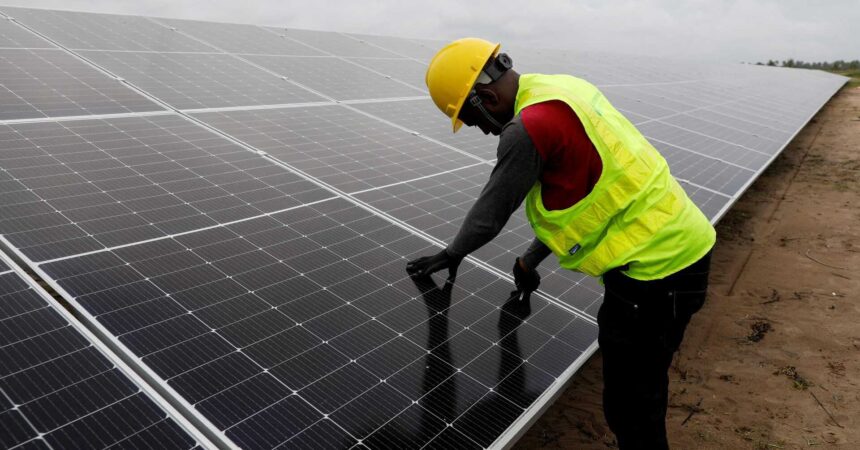
The planned investment targets solar power generation, mini grids, and distribution infrastructure designed to reach communities currently cut off from the national grid. Nigeria’s Rural Electrification Agency has already reported progress, noting that domestic solar manufacturing capacity has grown from 120 megawatts two years ago to approximately 300 megawatts in 2026. A further 3.7 gigawatts of capacity is currently in development.
Furthermore, the DARES programme — a $750 million initiative already underway — is specifically targeting rural electricity access through distributed solar systems. The additional $11 billion would expand that effort dramatically. The goal is to move from a country where electricity is a privilege to one where it is a basic reality for all.
Why Nigerians Are Sceptical
Related News
The electricity problem in Nigeria is not new. It is not even new that billions have been spent trying to fix it. Estimates suggest that Nigeria has invested tens of billions of dollars in the power sector since 2000, with results that most citizens would describe as deeply disappointing.
That history makes the $11 billion solar announcement a complex one. The money, if properly directed, could be transformative. However, Nigerians have seen plans, targets, and investment announcements before. Consequently, the question being asked across the country is not whether the money will be spent. It is whether it will actually produce reliable light in ordinary homes.
The Regulatory Shift That Helps
One genuinely encouraging development is the Nigerian Electricity Regulatory Commission’s 2026 Mini-Grid Regulations, which increased allowable mini-grid capacity from 1 megawatt to 5 megawatts, and up to 10 megawatts for interconnected systems. That change makes more projects commercially viable and has already attracted private investment.
Approximately $425 million flowed into Nigeria’s renewable energy sector in 2025 alone, with eight new manufacturing plants established. That is real momentum. The $11 billion plan, if executed with the same transparency, could genuinely change the energy landscape. Nigeria is watching, cautiously, to see if this time will be different.