

Honest. Direct. And a little alarming. Nigeria’s top disease control official has told Nigerians exactly where the country stands on Ebola preparedness — and it is not at 100 per cent.
Dr. Jide Idris, Director-General of the Nigeria Centre for Disease Control and Prevention, revealed on Monday that Nigeria is currently about 59 per cent prepared to respond to a possible Ebola outbreak. He made the admission during a live interview on Arise Television, as concerns grow over the spread of Ebola in parts of Central and East Africa.
What 59 Per Cent Actually Means
Related News
“Our latest level of assessment puts us at about 59 per cent,” Idris said. “You can never be 100 per cent prepared, but the essence is that we continue to improve our readiness because situations keep changing.”
That figure reflects real gaps — particularly at Nigeria’s land borders, which remain porous and difficult to monitor. The NCDC boss warned that unregulated movement through unofficial entry points significantly raises the risk of disease importation. International airports are better controlled. However, land borders present a far greater challenge.
The Current Ebola Situation in Africa
Related News
Ebola first resurfaced in the Democratic Republic of Congo’s Ituri province in late April 2026. It subsequently spread to Uganda, which closed its borders with the DRC after recording confirmed cases. Nigeria has classified the risk of importation as high, given the country’s significant international travel traffic and large diaspora population.
Meanwhile, Idris confirmed that Nigeria is currently managing between seven and eight separate disease outbreaks at once — including cholera and Lassa fever, both of which continue to cause deaths. The NCDC is stretched. Still, the DG insists that if Ebola enters Nigeria, the systems in place are strong enough to stop it.
The Reassurance
“Let me be frank with you: if Ebola comes into Nigeria, we will stop it with the current knowledge and systems we have now,” Idris said at a separate press briefing in Lagos.
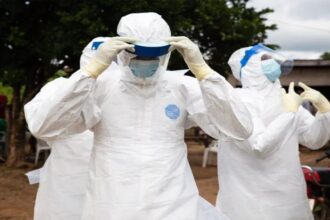
The NCDC has expanded laboratory capacity, trained health workers, and distributed emergency materials to high-risk states. As a result, the situation is not one of unpreparedness — it is one of ongoing improvement in the face of a real and present threat. Nigerians are urged to remain calm but vigilant.