

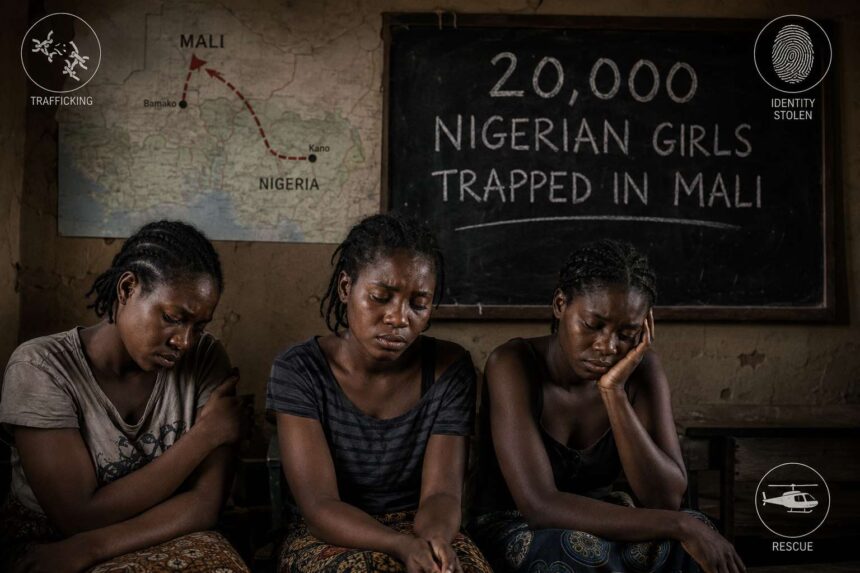
The truth hit hard. Three Nigerian girls thought they were going to Malaysia for good jobs. Instead, they ended up in Mali, forced into prostitution. Bella Boluwatife, Linda Zainab, and Amoke Joy spoke out in April 2026. Their story exposed a criminal syndicate that has trapped thousands.
This is not an isolated case. It is part of a massive trafficking network. Nigerian anti-trafficking agencies say roughly 20,000 Nigerian women and girls are held in forced prostitution in Mali. Some were as young as 16 when they were tricked. Most came from Edo State, the epicenter of this problem in Nigeria.
The trafficking method is sinister. Female recruiters, known as madams, promise jobs in five-star restaurants in Malaysia. They say victims will earn $700 monthly wages. The reality is brutal. Victims are transported across multiple borders. Their documents are seized. They are held in debt bondage. They are forced into sex work in Mali.
Related News
How the Trafficking Network Operates
The criminal network is highly organized. It is transnational. It spans Nigeria, multiple West African borders, and ends in Mali. The recruiters use deception as their main tool. They target vulnerable women and girls. Many are from poor families seeking better opportunities.
The recruitment process follows a pattern. Traffickers find victims through social networks, community contacts, or online advertisements. They promise overseas employment with good pay. They make it sound legitimate. They collect money for “visa fees” and “travel costs.” Once victims pay, they are committed.
The journey is dangerous. Victims are transported across Nigeria, then through Niger or other border countries, finally reaching Mali. They are told they are going to Malaysia. Some realize the truth too late. By then, they are stranded in a country they do not know. They cannot speak the language. They have no money. They have no documents.
Related News
Once in Mali, the exploitation begins. Victims are forced into sex work immediately. They are told they owe a debt. Bella, Linda, and Amoke were each told they owed 1.5 million CFA francs. That is about $2,500. They must work to repay it. The debt is impossible to clear. Per client, they earn between 1,000 to 1,500 CFA francs. That is $1.68 to $2.52 per customer.
The Mining Industry Connection
Why Mali? The sex industry there has grown rapidly in recent years. The boom is linked to artisanal mining. Mali’s north-east region of Kayes and south-east region of Sikasso have booming mining industries. These areas have 200 odd mining sites scattered across them.
Mining sites attract male workers. Many are single. They have money to spend. This creates demand for prostitution. Traffickers exploit this demand. They bring in women from Nigeria to serve mining workers. The victims are found at mining sites across the two main mining regions.
The mining connection makes the trafficking harder to stop. Mining areas are often remote. Law enforcement presence is weak. Criminal networks operate in the shadows. Victims are hidden among mining communities. They are isolated from help.
The artisanal mining industry in Mali is unregulated. It attracts illegal activities. Trafficking is one of them. The industry grows, and so does the sex trade. More miners mean more demand. Traffickers respond by bringing more victims. The cycle continues.
The Scale of the Crisis
The numbers are shocking. At least 20,000 missing women and girls were found trafficked from Nigeria to Mali. This was confirmed by Nigeria’s anti-trafficking agency head in January 2019. The intelligence was concrete. The women were living in slave-like conditions.
But the situation has not improved. In April 2022, NAPTIP (National Agency for the Prohibition of Trafficking in Persons) said more than 20,000 Nigerian women and young girls are still trapped in Mali. They are in forced prostitution and labor. They are willing to come home. But they cannot escape.
Some estimates are even higher. Since 2017, an estimated 250,000 female Nigerians have been trafficked to Mali. This includes women and young men exploited in different forms. They work in parties, factories, markets, and moto parks. Over 250,000 Nigerian young men and women are languishing in exploitation centers in Mali.
The 20,000 figure represents those still trapped. It does not include those who have been rescued or those who escaped. It does not include victims from other countries. The total number of trafficking victims in Mali is likely much higher.
The Victims’ Stories
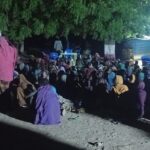
The survivors who speak out reveal the horror. Bella, Linda, and Amoke were rescued through coordinated intervention by authorities and anti-trafficking groups. They spoke to Vanguard reporter in April 2026. Their story exposed the syndicate.
They were deceived. They were transported across multiple borders. They were held in debt bondage. They were eventually rescued. But many others are not rescued. They remain trapped. They suffer daily. They have no freedom.
A 22-year-old physically challenged woman was rescued from a human trafficking ring in Mali in April 2026. She was forced into exploitation. Even disabled victims are targeted. Traffickers do not discriminate. They exploit anyone vulnerable.
In February 2022, NAPTIP and partners rescued 15 Nigerian girls and a three-year-old boy from Mali. The boy was the child of one of the trafficked women. He was born in captivity. He had never known freedom. The scars were there. The stories were there. All were victims.
Some girls were abducted on their way to school. Most were tricked by human traffickers. The deception is the main tool. Abduction is less common. Traffickers prefer to lure victims with false promises. It is easier. It is less risky.
The Role of Female Recruiters
The traffickers are not just men. Female recruiters, called madams, play a key role. They promise jobs in five-star restaurants. They say victims will earn good wages. They are trusted because they are women. Potential victims feel safer talking to them.
These madams are often from the same communities as the victims. They know the families. They know the weaknesses. They exploit trust. They use social connections. They make the promise seem real. This is why Edo State is the epicenter. The network is community-based.
The madams benefit from the trafficking. They are part of the criminal network. They recruit victims. They transport them. They deliver them to Mali. They collect payment. They are paid for each victim. The business is profitable.
Some madams were once victims themselves. They were trafficked. They survived. Then they became traffickers. The cycle continues. Abuse becomes exploitation. Victims become perpetrators. This is how criminal networks grow.
Rescue Operations and Challenges
Rescue operations happen. They are coordinated. They involve anti-trafficking agencies in Nigeria and Mali. In February 2022, 15 girls and a child were rescued. In April 2026, three Nigerian girls were rescued. In February 2026, a 22-year-old disabled woman was rescued.
But rescue is difficult. Victims are hidden. They are in remote mining areas. They are controlled by traffickers. Their movements are restricted. They cannot escape on their own. Authorities must find them. They must extract them safely.
The rescue operations require coordination between countries. Nigeria and Mali must work together. They must share intelligence. They must conduct joint operations. This is complex. It takes time. Many victims are not rescued before harm occurs.
NAPTIP has conducted rescue operations in Egypt, Libya, and Iraq as well. Similar networks exist in those countries. The trafficking syndicate is global. Mali is one destination. But the problem is wider. Survivors face abuse and exploitation in all these countries.
Legal Framework and Enforcement
Mali has laws against trafficking. Law 2012-023 of 12 July 2012 criminalized human trafficking for sexual exploitation. Mali ratified the 2000 UN TIP Protocol in April 2002. The legal framework exists. But enforcement is weak.
In February 2025, Malian law enforcement conducted a large-scale operation in Bamako. They arrested 477 individuals involved in human trafficking and transnational fraud. The suspects were primarily from West African nations. They included 329 men, 148 women, and 14 children.
This operation was the culmination of months of investigation. It resulted in arrests of people accused of human trafficking. They recruited, transported, and exploited vulnerable individuals. They used false promises of employment. They engaged in sexual exploitation and forced labor.
The suspects hailed from Guinea, Gambia, Guinea-Bissau, Sierra Leone, and Senegal. This shows the transnational nature. The network spans multiple countries. It is not just Nigeria to Mali. It is West Africa wide.
The investigation is ongoing. Authorities are considering national and international legal proceedings. They aim to establish all responsibilities. They want to identify the beneficiaries of these criminal networks. The full scope is not yet known.
The Impact on Victims
The psychological impact is severe. Victims face abuse and exploitation. About 77 percent of human trafficking survivors have been sexually abused or exploited by traffickers. About 97 percent of trafficking survivors are women. The gender disparity is clear.
Victims suffer trauma. They suffer from post-traumatic stress disorder. They suffer from anxiety and depression. They have difficulty reintegrating into society. The trauma is long-lasting. It affects their future.
The physical impact is also serious. Victims work in dangerous conditions. They are exposed to health risks. They may not have access to medical care. They may suffer from diseases. The sex work is unprotected. The risk is high.
Some victims have children in captivity. The three-year-old boy rescued in 2022 was born in Mali. He never knew freedom. His mother was trafficked. He was born into exploitation. This is modern-day slavery. It is unacceptable.
Government Response and International Action
Nigeria’s government has responded. NAPTIP is the lead agency. They conduct field studies. They rescue victims. They work with Malian authorities. They coordinate with anti-trafficking groups. The response is ongoing.
But the problem persists. 20,000 victims are still trapped. The rescue operations are not enough. The prevention is not enough. The enforcement is not enough. Something more is needed.
International action is required. The trafficking is transnational. It requires international cooperation. Countries must work together. They must share intelligence. They must conduct joint operations. They must prosecute traffickers.
The US Department of State reports that Nigerians are trafficked to at least 40 countries. Most survivors face abuse and exploitation. The problem is global. It requires global action. No single country can solve it alone.
Conclusion: A Crisis That Demands Action
The Mali sex trafficking ring is a crisis. It traps 20,000 Nigerian women and girls. It exploits them in prostitution. It uses deception and debt bondage. It is organized and transnational. It is profitable for traffickers. It is devastating for victims.
The forward-looking outlook is uncertain. The network continues. It exploits vulnerable Nigerians. Similar rescue operations have been carried out in Egypt, Libya, and Iraq. The trafficking network persists. It adapts. It expands.
Unless something really urgent is done, the crisis will continue. Mali is not a greener pasture. Traffickers use that lie to deceive girls. The evidence is there. The scars are there. The stories are there. All are victims. Something must be done very urgently.
The 20,000 trapped victims need rescue. They need support. They need rehabilitation. They need to come home. But rescue is not enough. Prevention is needed. Enforcement is needed. International cooperation is needed. The cycle must end.