

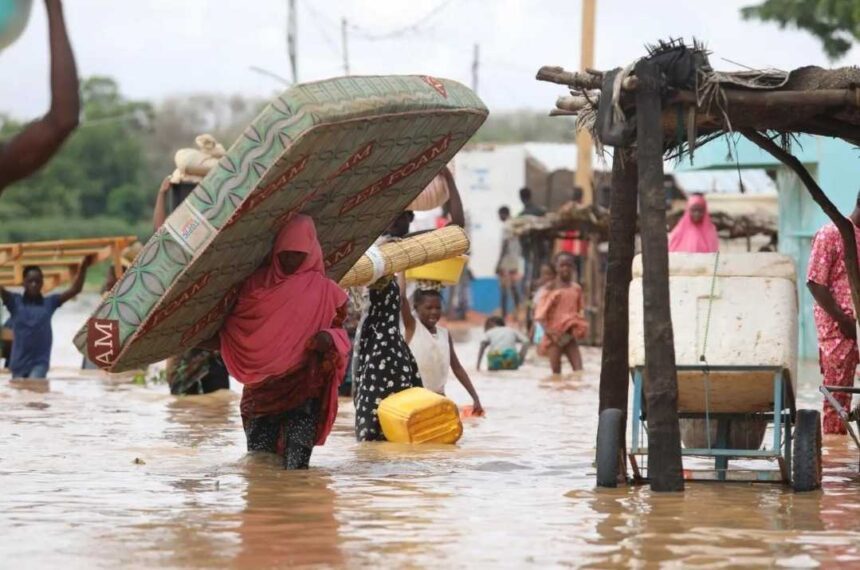
DUTSE — The National Orientation Agency has warned communities in Jigawa State to stop practices that worsen recurring flood disasters in the state. The agency issued the warning in a statement on Monday, citing the need for communities to take active responsibility for preventing the kind of flooding that has repeatedly devastated lives and property in the state.
NOA Jigawa State Director Abdullahi Muhammed said common community practices including dumping refuse in drains, encroaching on floodplains, and removing vegetation along riverbanks are significantly worsening the impact of annual rainy season floods. He said communities must change these behaviours if they want to reduce flood losses.
“Many of the flood problems communities face are self-inflicted. We block our own drains with refuse. We build on riverbeds. We cut down the trees that hold the soil together. Then we wonder why the floods are getting worse every year,” Muhammed said at a community engagement event in Dutse.
Related News
Jigawa State is among the states most severely affected by seasonal flooding in Nigeria. The state’s flat topography, poor drainage infrastructure, and proximity to major rivers make it particularly vulnerable. Floods in 2022, 2023, and 2024 destroyed tens of thousands of homes and displaced hundreds of thousands of residents.
NEMA and State Response
The National Emergency Management Agency has previously warned that 2026 is expected to be a severe flood year for the north-central and northwest regions of Nigeria, including Jigawa. NEMA has called on state governments to begin early evacuation of residents from the most vulnerable areas.
Related News
Jigawa State Government has launched a flood mitigation campaign that includes desilting of drainage channels, construction of embankments in high-risk areas, and a public awareness campaign about flood safety. The government said it is working with local governments to identify the most at-risk communities before the peak of the rainy season.
In addition, the NOA statement raised concerns about misuse of Ready-to-Use Therapeutic Food, known as RUTF, in Jigawa. The therapeutic food, designed for children with severe acute malnutrition, is being sold in some communities rather than used for its intended medical purpose. The agency urged community leaders to ensure RUTF reaches the malnourished children it is meant for.
Climate and Community
Climate experts say Jigawa’s flood problem is being worsened by climate change, which is intensifying rainfall patterns across the Sahel region. However, they also say that community behaviours and governance failures are amplifying the impact of each flood event beyond what climate change alone would cause.
Better urban and rural planning, stronger enforcement of building regulations in floodplain areas, and sustained investment in drainage infrastructure are all needed to reduce Jigawa’s flood vulnerability. NOA said it will continue its community engagement campaign throughout the rainy season to keep public awareness high.
The agency also called on the public to register as voters ahead of the 2027 elections during its community engagement sessions. It said civic participation and good governance are ultimately the most powerful tools communities have to demand better flood management from their elected representatives.