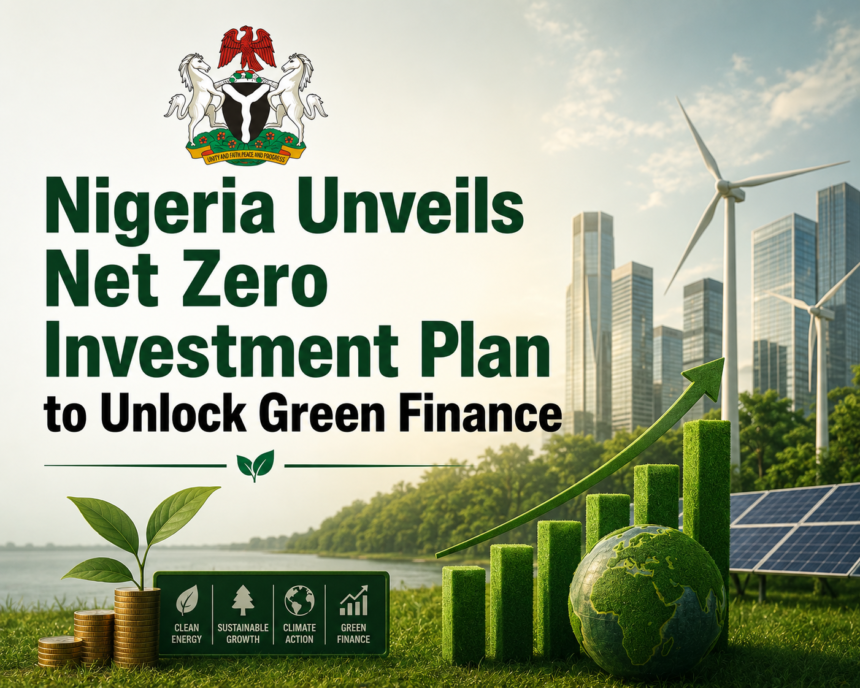
ABUJA — Nigeria has unveiled a landmark Net Zero Investment Plan aimed at unlocking billions of dollars in international climate finance. The plan, presented by the Minister of Environment Balarabe Abbas on Monday, positions Nigeria as a serious player in the global green economy transition and targets international investors, development banks, and climate funds.
The plan outlines Nigeria’s pathway to achieving net zero carbon emissions by 2060. It includes specific investment targets in renewable energy, clean transportation, sustainable agriculture, and green infrastructure. Officials said the plan creates a structured framework that gives international investors clear guidance on where and how to deploy capital in Nigeria’s green economy.
Abbas said Nigeria’s size, population, and natural resources make it uniquely positioned to become Africa’s green economy anchor. He said the plan is designed to attract at least $10 billion in climate finance over the next five years from sources including the World Bank, African Development Bank, and private green bond markets.
Related News
“Nigeria is not waiting to be left behind in the green economy. We are taking leadership. This plan is our commitment to the world that we are serious about clean growth and about protecting the environment for our children and grandchildren,” Abbas said.
Renewable Energy at the Centre
Renewable energy is the backbone of the Net Zero Investment Plan. Nigeria has enormous solar potential, with most of the country receiving over 2,000 hours of sunshine annually. However, solar energy penetration remains low, with most power still generated from gas turbines and aging hydroelectric stations.
Related News
The plan targets 10 gigawatts of new renewable energy capacity by 2030. This would roughly double Nigeria’s current total power generation capacity and provide electricity to millions of Nigerians who currently live without reliable grid access. Solar, wind, and small hydro projects across different geopolitical zones are all part of the plan.
Furthermore, the plan includes a green hydrogen component. Nigeria’s natural gas infrastructure could be repurposed to produce and transport green hydrogen, a clean fuel that can be exported to Europe and Asia. Several European governments have expressed strong interest in sourcing green hydrogen from Africa.
Challenges Ahead
However, Nigeria’s track record on environmental policy implementation raises legitimate questions about how ambitious the plan will be in practice. The country still flares significant quantities of gas from oil production despite decades of regulatory efforts to end flaring. Environmental regulations in the Niger Delta remain poorly enforced.
International climate finance experts said the plan is credible as a document but must be backed by legislative reform, regulatory capacity, and genuine political will to attract the scale of investment it targets. They said investors have seen attractive-sounding climate commitments from Nigeria before.
The Dangote Refinery’s positive impact on Nigeria’s trade balance and carbon footprint from reduced product imports is cited in the plan as evidence of what large-scale domestic investment in cleaner infrastructure can achieve. Officials said the refinery is a model for the kind of industrialisation Nigeria wants to scale across other sectors.