

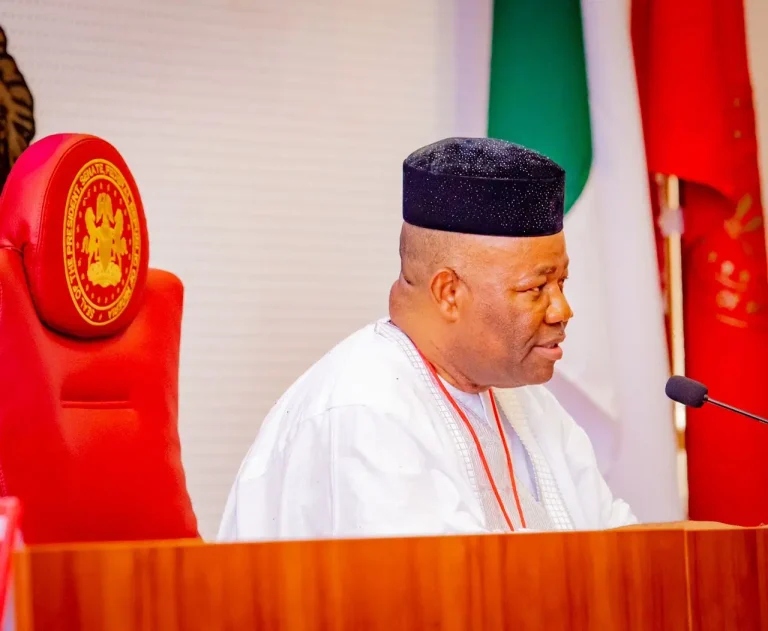
Lawmakers across Nigeria have reaffirmed their support for Senate President Godswill Akpabio, declaring that there is no vacancy in the leadership of the upper chamber. The declaration was made during a press briefing in Abuja, where legislators emphasized continuity and stability. They insisted that Akpabio’s leadership remains intact as the 11th National Assembly approaches. The move signals a strong show of confidence in his stewardship.
Akpabio emerged as Senate President in 2023 after a competitive leadership contest. His tenure has been marked by efforts to strengthen legislative‑executive relations and streamline parliamentary proceedings. Historically, the Senate Presidency has been a focal point of political rivalry, often leading to instability. Lawmakers’ latest endorsement seeks to avoid such disruptions. It reflects a desire to maintain cohesion within the chamber.
During the briefing, legislators highlighted Akpabio’s achievements in passing key bills and fostering unity among senators. They argued that his leadership has brought order and efficiency to Senate operations. Plans are underway to consolidate support across party lines to ensure his continued tenure. Lawmakers vowed to resist attempts to destabilize the chamber. They maintained that Akpabio’s position is secure heading into the next assembly.
Related News
Supporters hailed the endorsement as a sign of political maturity and stability. Civil society groups, however, urged lawmakers to prioritize national interest over loyalty to individuals. Analysts warned that declaring “no vacancy” could discourage healthy competition in democratic institutions. Critics argued that democracy thrives on open contests, not closed endorsements. Citizens expressed mixed reactions, balancing hopes for stability with concerns about accountability.
Observers believe continuity in Senate leadership could ensure smoother passage of economic reforms and strengthen investor confidence. Stable legislative leadership may also reinforce executive‑legislative cooperation. Strategically, Akpabio’s retention could enhance Nigeria’s governance framework. However, critics caution that lack of competition may weaken oversight. The endorsement underscores the tension between stability and democratic openness.
The lawmakers’ backing of Akpabio signals a strong push for continuity in Nigeria’s Senate leadership. While supporters insist there is no vacancy, debates about democratic processes persist. The coming months will reveal whether the endorsement translates into uncontested leadership. Nigerians await clarity as the 11th Assembly approaches. Ultimately, the decision will test the balance between stability and democratic choice.