

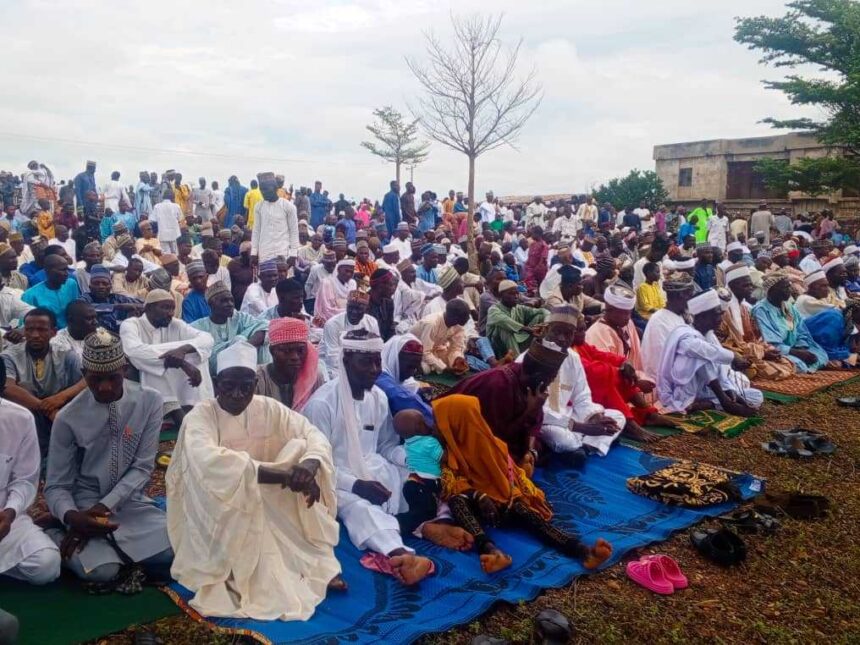
LAGOS — Nigerians extended their Eid al-Adha celebrations into a second day on Thursday, May 28, as the Federal Government’s second public holiday for the festival continued to give families, friends, and communities time to gather, pray, and share in the spirit of the feast of sacrifice.
Across northern Nigeria, the celebrations maintained their festive energy. Traditional Sallah durbars continued in several cities, with emirate and district councils hosting colourful processions featuring horses, traditional musicians, and display of cultural regalia. In Kano, the Sallah durbar at the palace of the Emir of Kano drew large crowds of spectators.
In Lagos and other southern cities, the second day of Sallah focused on family visits and the continued sharing of ram and cow meat. Neighbourhoods across Mushin, Surulere, Agege, and Isale-Eko maintained the inter-faith warmth that characterised the first day, with non-Muslim residents joining Muslim neighbours for food and conversation.
Related News
Markets and commercial areas in most cities remained largely closed on the second holiday. However, petrol stations, pharmacies, and essential food vendors stayed open to serve residents. Traffic was noticeably lighter than normal, with most Nigerians choosing to stay home or visit nearby family rather than travel long distances.
Cross-Faith Celebrations
The Christian Association of Nigeria’s goodwill message on the first day of Sallah generated significant positive response. Many Nigerians across religious lines said the message reflected the kind of inter-faith solidarity that the country needs more of, particularly at a time of rising political and security tensions.
Related News
Vice President Kashim Shettima, who is Muslim, gave an Eid sermon in which he called on Nigerians to demonstrate the values of sacrifice, unity, and compassion that Eid al-Adha represents. He said the country’s diversity is a strength and that Nigerians must resist those who seek to divide them along religious or ethnic lines.
Furthermore, several Nigerian celebrities used the second Sallah day to visit orphanages, hospitals, and community centres to share food and gifts with less fortunate Nigerians. Social media documented several such visits, generating positive public response and reinforcing the spirit of the festival.
Back to Business Tomorrow
With two days of Sallah public holidays followed by Democracy Day on Friday, May 29, many Nigerians are enjoying an extended five-day break. Most federal government offices, banks, and businesses will not reopen until Monday, June 1, which also coincides with the launch of the T+1 stock market settlement system.
The FRSC said traffic on major highways began picking up on Thursday afternoon as some travellers began returning to their base cities ahead of the weekend. Officers have been deployed to manage road safety during the return journey period.
Nigerians who mark the end of the Sallah period typically say Barka da Sallah, a Hausa farewell that extends the blessing of the festival to those they encounter. On the second day of Sallah, across all the diversity and complexity of Nigeria, that greeting was a reminder of what the country looks like when it is at its best.