


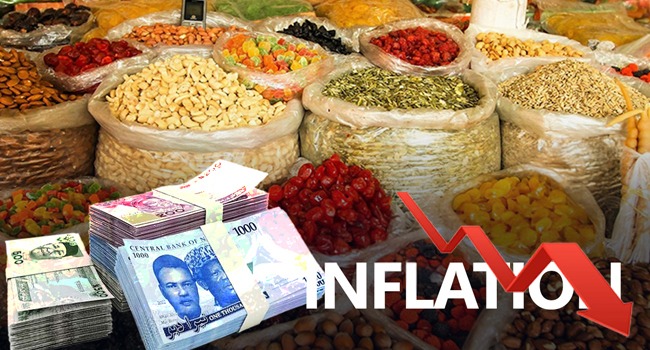
Nigeria’s headline inflation rate recorded a marginal decline in January 2026, settling at 15.10 percent—a 0.05 percentage point drop from December 2025’s 15.15 percent, according to the latest data from the National Bureau of Statistics (NBS).
The decline, while modest, marks a continued easing of price pressures, driven primarily by falling costs of staple food items that dominate household consumption baskets across the country.
Food Prices Drive Disinflation
The NBS monthly inflation report attributed the decline to reductions in prices of key food items including water yam, eggs, green peas, groundnut oil, soya beans, palm oil, maize grains, guinea corn, beans, beef meat, melon (egusi), cassava tuber, and cow peas.
On a month-on-month basis, headline inflation stood at -2.88 percent—a significant improvement from December 2025’s 0.54 percent increase. This indicates that average price levels actually decreased in January compared to the previous month.
Year-on-year, the 15.10 percent figure represents a dramatic 12.51 percentage point drop from January 2025’s 27.61 percent, underscoring the effectiveness of monetary policy and improved agricultural supply in cooling the economy.
Food inflation on a month-on-month basis recorded an even steeper decline of -6.02 percent, down from -0.36 percent in December.
Sectoral and Regional Variations
The NBS reported that three divisions contributed most substantially to headline inflation: Food and non-alcoholic beverages (6.04 percent), Restaurants and accommodation services (1.95 percent), and Transport (1.61 percent). The smallest contributors were Recreation, sport and culture (0.05 percent) and Alcoholic beverages, tobacco and narcotics (0.06 percent).
Newly introduced sub-indices revealed broad-based declines: Imported Food fell 6.81 percent, Farm Produce dropped 5.10 percent, Goods declined 4.63 percent, and Energy decreased 3.13 percent. Only Services recorded an increase, rising 0.48 percent.
Geographically, year-on-year food inflation was highest in Kogi (19.84 percent), Benue (18.38 percent), and Adamawa (17.29 percent), while Ebonyi (1.69 percent), Abia (3.23 percent), and Imo (3.74 percent) recorded the slowest rises. On a month-on-month basis, Yobe (-11.88 percent), Nasarawa (-9.06 percent), and Sokoto (-8.31 percent) saw the steepest food price declines.
Urban inflation stood at 15.36 percent year-on-year, while rural inflation was 14.44 percent—reflecting slightly higher price pressures in cities.
Mixed Fortunes for Consumers and Farmers
Commenting on the figures, Dr. Muda Yusuf, CEO of the Centre for the Promotion of Private Enterprise (CPPE), described the trend as presenting “mixed fortunes” for different economic actors.
“The sharp moderation in food inflation carries substantial welfare benefits because food accounts for the largest share of household expenditure in Nigeria,” Yusuf explained. Lower food prices are expected to improve real purchasing power, particularly for low-income households, reduce poverty and food-security pressures, and support gradual recovery in consumer demand.
However, he warned of significant downside risks. “Declining food prices benefit consumers, but they also pose risks for farm incomes and rural economic stability. Sustained weakness in farm-gate prices may reduce farmers’ revenues and investment capacity.”
Yusuf cautioned that this could weaken rural purchasing power and discourage agricultural production, potentially creating future supply shortages and renewed inflation pressures.
Policy Balancing Act Required
The economist emphasized the need for careful policy calibration: “There is a critical need to balance consumer affordability with producer sustainability to safeguard national food security.”
He characterized the January inflation outcomes as signaling “a meaningful transition toward macroeconomic stabilization,” driven primarily by declining food prices and supported by easing core inflation.
“The development is positive for household welfare, consumption recovery, and investment confidence, but presents downside risks for farm incomes and rural economic sustainability,” Yusuf added.
The central policy priority, he argued, must be to consolidate disinflation while protecting agricultural productivity and rural livelihoods, a balance that will determine whether current price moderation transforms into durable stability and inclusive growth.
Discover more from News247 Nigeria
Subscribe to get the latest posts sent to your email.