

— Presidency Reveals Damning Timeline
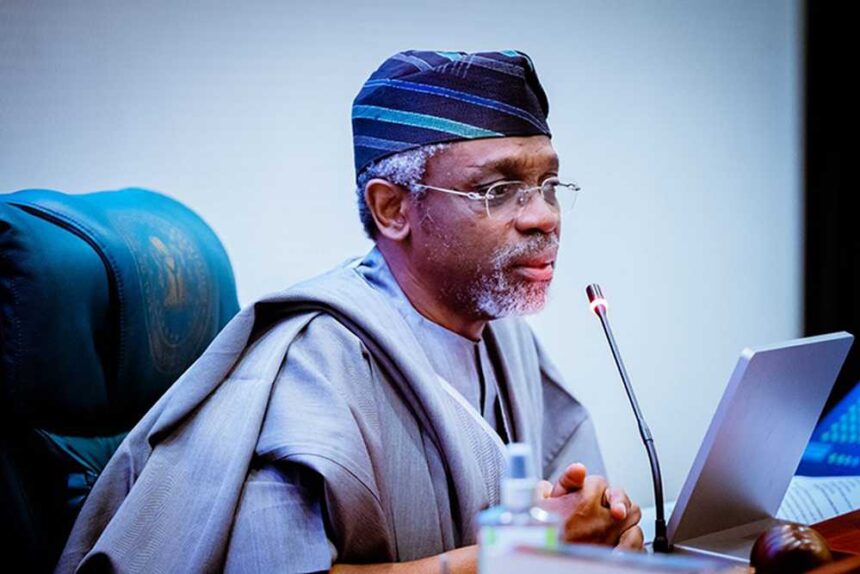
The man accusing President Bola Tinubu’s Chief of Staff, Femi Gbajabiamila, of collecting N400 million in bribes was already facing an eight-count criminal charge at a Federal High Court when he went public with those allegations.
That is the central fact buried inside the Presidency’s comprehensive rebuttal, released on Wednesday through Special Adviser on Information and Strategy Bayo Onanuga — and it reframes the entire controversy.
Related News
Prince Adeniyi Adeyemi Matthew had presented himself to the public, to civil society groups, and to foreign diplomats as the Director-General of the Presidential Foreign Intervention Promotion Council, a body he claimed was legitimate, staffed, budgeted and operating from a floor of the Federal Secretariat Complex in Abuja. He alleged that Gbajabiamila demanded N27.4 billion from the agency’s take-off grant and separately collected N400 million through proxies to approve his appointment, with an outstanding balance of N200 million left unpaid. He said the disagreement over that balance triggered threats on his life.
He called for a public investigation panel, demanded that Gbajabiamila step aside, and urged civil society and international organisations to join the push for accountability.
What he did not disclose was that police had arrested him eight months earlier.
Related News
According to the Presidency’s Wednesday statement, Gbajabiamila formally petitioned both the Department of State Services and the Nigeria Police Force on October 17, 2025, alerting them to forged appointment letters bearing falsified signatures, reference numbers, and seals of his office. Police arrested Adeyemi ten days later, on October 27, at his Abuja secretariat office. They searched the premises and his Suleja residence, recovering documents they said confirmed the fraud.
By November 2025, police had filed an eight-count charge against Adeyemi and two accomplices at the Federal High Court in Abuja. The charge covered criminal forgery, impersonation, and obtaining by false pretences. The court scheduled the matter for hearing on July 27 of this year.
Adeyemi was released on police bail. It was while on that bail — and months into active criminal proceedings — that he resurfaced publicly to level bribery accusations against the same Chief of Staff whose office had initiated the criminal petition against him. The Presidency on Wednesday noted that his new claims directly contradicted the statement he had given police investigators in November 2025.
The damage Adeyemi allegedly caused stretched far beyond the Chief of Staff’s office. The Ministry of Foreign Affairs raised a separate alarm after he convened a meeting with foreign ambassadors in Abuja without notifying or receiving clearance from the ministry. He also requested an official note verbale from the ministry addressed to the United States, seeking visa facilitation for staff of his fictitious agency — a request that moved through formal channels before being identified as fraudulent.
The Office of the National Security Adviser and the Office of the Secretary to the Government of the Federation both separately contacted the Chief of Staff’s office seeking clarification on the status of the purported council after encountering its materials. Gbajabiamila responded to both offices on November 5, 2025, flatly denying any knowledge of Adeyemi or his organisation.
The financial footprint of the scheme was extensive. Police established that Adeyemi operated 34 bank accounts, nine of which were opened in the names of fictitious agencies. He also fraudulently opened a Central Bank of Nigeria account by providing false information to the Office of the Accountant-General of the Federation — a process that requires navigating official federal financial protocols.
This is not the first time Adeyemi has built a public identity around a fictitious institution. In November 2016, he presented himself as an Ambassador and President-General of the World Youth Organisation, claiming the body was affiliated to the United Nations and that he had been elected to the role at a ceremony in New Delhi, India. Nigerian media reported his emergence widely. The United Nations subsequently denied the existence of any such organisation.
The Centre for Transparency and Accountability in Governance on Wednesday called on the DSS, the police, and anti-corruption agencies to move against Adeyemi immediately, describing his conduct as a dangerous and recurring pattern of impersonation and institutional blackmail. The group insisted that his allegation of paying N600 million to secure his appointment demanded documented evidence — including bank transfer records, payment receipts, account details, and the identities of any intermediaries allegedly involved — before it could be taken seriously.
The Presidency closed its Wednesday statement with a warning to politicians who had used Adeyemi’s claims to attack the Chief of Staff. It reminded them that the matter is now before a court of law and that public commentary at this stage risks violating the sub judice rule.
“They are advised to await the trial of Adeyemi and his accomplices, as well as the court’s judgement,” Onanuga’s statement read.
One question the Presidency did not address on Wednesday was Adeyemi’s public challenge over the 2026 national budget, in which he claimed the agency appeared on pages 50 and 51 of the Appropriation Act. Analysts and editorial commentators have noted that if the claim has any basis, it deserves a direct answer from the relevant authorities — independent of the criminal case against Adeyemi.
The Federal High Court hearing on July 27 will determine whether the criminal case proceeds and what weight the evidence recovered from Adeyemi’s office and residence carries. Until then, the Presidency has positioned itself clearly: the accuser is the accused, the case is before the court, and the public should let the judicial process run its course.