

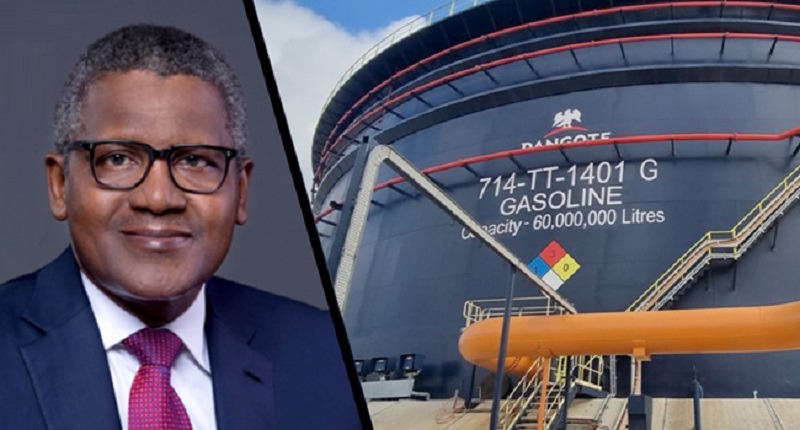
In a strategic shift to dismantle Nigeria’s dependence on imported fuel, the Dangote Petroleum Refinery has formally offered major marketers the option to evacuate products via coastal vessels. However, the concession comes with a stark warning: this method could add approximately N75 to every litre of petrol, potentially driving pump prices toward N1,000.
The offer, confirmed to the Daily Trust, marks a significant overture in a prolonged stalemate with members of the Major Energies Marketers Association of Nigeria (MEMAN) and the Depot and Petroleum Products Marketers Association of Nigeria (DAPPMAN). Despite the refinery’s operational capacity—reporting production of up to 50 million litres of Premium Motor Spirit (PMS) daily—official data shows more than half of domestic consumption is still met through imports.
The Distribution Dilemma: Gantry vs. Coast
At the heart of the dispute is a fundamental clash in distribution philosophy. Dangote has championed and heavily invested in gantry loading, a system where thousands of tankers load directly at the refinery’s 91 bays for dispatch across the country. The company argues this is the most cost-efficient model, having deployed a N700 billion fleet of CNG-powered trucks to support it.
Conversely, major marketers, with hundreds of billions invested in coastal tank farms and depots, insist on vessel-based evacuation. They argue bulk marine transport to their regional depots is more logical and scalable than a massive fleet of trucks traversing from Lekki.
Dangote contends that coastal logistics introduce port dues, vessel charges, and maritime levies—costs it says add no value for the end-user. “These additional costs would ultimately be borne by Nigerians, either through higher pump prices or reduced margins across the value chain,” a refinery source stated. The company estimates that if applied to Nigeria’s average daily consumption, coastal costs could siphon an extra N1.75 trillion annually from the economy.
Marketers Push Back, Economist Calls for Scrutiny
The refinery’s cost warning has been met with skepticism from marketers. They counter that bulk coastal shipment should logically command a lower price, not a premium, and want Dangote to absorb associated port charges paid in dollars to agencies like the NPA and NIMASA.
Dr. Billy Gillis-Harry, National President of the Petroleum Products Retail Outlets Owners Association of Nigeria (PETROAN), defended coastal delivery. “It reduces road risks, delays, theft, and multiple checkpoints,” he argued, stating that vessel transport to a hub like Port Harcourt efficiently serves entire regions.
The economic validity of the N75 surcharge is now a central question. Renowned petroleum economist Professor Wumi Iledare framed the debate as one of “logistics economics rather than politics.” He urged the Nigerian Midstream and Downstream Petroleum Regulatory Authority (NMDPRA) to ensure pricing reflects genuine cost recovery, not market power.
“Whether the charge is N75 or N100 only matters if it reflects abuse of market power, not genuine cost recovery. The priority should be efficiency and transparency,” Iledare stated.
As negotiations continue, the outcome will critically shape Nigeria’s fuel supply chain, determining both operational logistics and the price millions pay at the pump.
Discover more from News247 Nigeria
Subscribe to get the latest posts sent to your email.