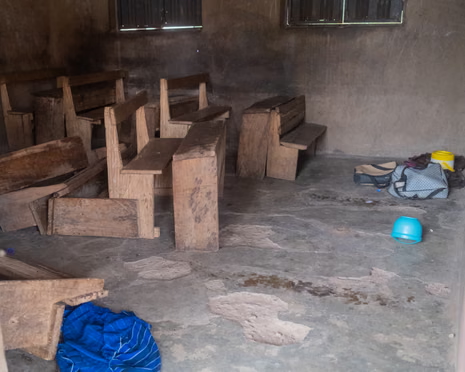


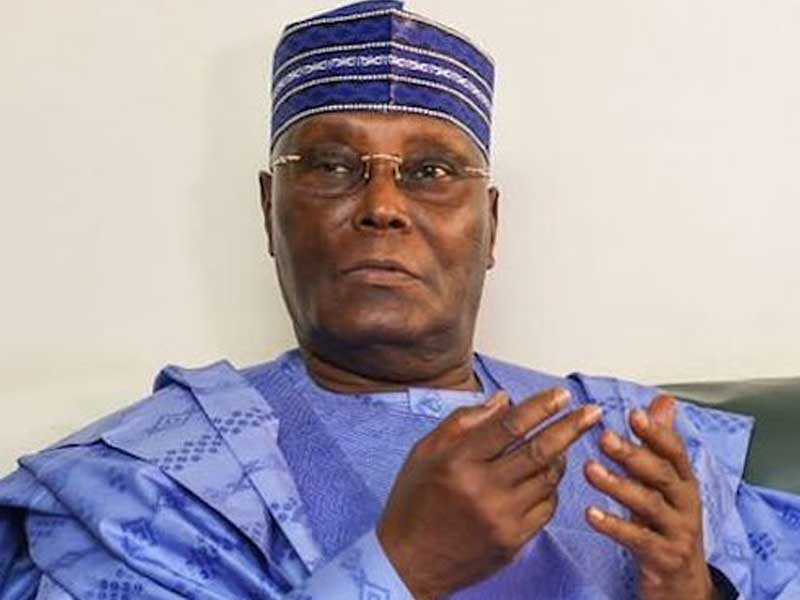
Former Vice President and African Democratic Congress presidential candidate Atiku Abubakar called on President Bola Tinubu on Wednesday to take urgent and decisive action to stop bandit attacks on schools across Nigeria, warning that the escalating crisis was undermining the country’s education sector and traumatising an entire generation of Nigerian children.
Atiku, in a statement issued by his media team, said the pattern of attacks on schools in Oyo, Borno, and other states showed a brazen disregard for the sanctity of educational institutions. He called for an emergency security summit that would bring together the President, state governors, security chiefs, and community leaders to develop a comprehensive national strategy for protecting schools and other civilian infrastructure from criminal and terrorist attacks.
‘Nigeria’s future is in its classrooms, and we cannot afford to allow bandits and terrorists to turn our schools into hunting grounds for innocent children,’ Atiku said, adding that the Oyo abduction in particular had gone on far too long without a rescue breakthrough. He said the families of the victims deserved better than continued assurances without results.
Related News
Warri-Itakpe Train Victims Mourned
Atiku also joined Peter Obi in mourning the three victims of the Warri-Itakpe train derailment on Sunday, June 8, 2026, calling for an immediate safety audit of all active rail lines in Nigeria and demanding that those responsible for maintenance failures be held accountable. Obi similarly expressed condolences and called for structural reforms in Nigeria’s rail safety governance framework.
Meanwhile, the Nigeria Union of Teachers continued its indefinite strike in Oyo State, with schools remaining closed as teachers refused to return to classrooms until the abducted colleagues and students were released and security guarantees were provided. The strike was spreading anxiety among parents and officials who worried about its long-term impact on the academic year for hundreds of thousands of Oyo students.
Related News
Furthermore, a Punch newspaper analysis published on Wednesday described Nigeria’s kidnapping economy as a crisis with deep structural roots, arguing that poverty, unemployment, and the proliferation of illegal small arms were the primary drivers of the abduction industry that had now spread from the northwest to southwestern states. The analysis called for investment in intelligence infrastructure, community policing, and socioeconomic development in high-risk communities rather than purely military responses. Notably, religious groups, professional bodies, civil society organisations, and opposition politicians were all now aligned in demanding a more effective government response. Consequently, the political pressure on the Tinubu administration over insecurity has reached its highest point since the start of his presidency.
Shettima Links Growth to Knowledge Investment
In a contrasting message on the same day, Vice President Kashim Shettima said Nigeria’s long-term prosperity would depend less on natural resources and increasingly on investment in knowledge, innovation, and human capital. He made the remarks during the groundbreaking of the Ekiti Knowledge Zone in Ekiti State. In addition, the Vice President strongly advocated for the reelection of Governor Oyebanji, saying his record of governance made him the right leader to carry Ekiti forward. As a result, the federal government’s messaging on Wednesday simultaneously addressed the country’s security pain points and its developmental aspirations, reflecting the complex communication challenge facing an administration under intense public pressure.