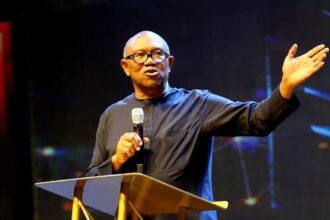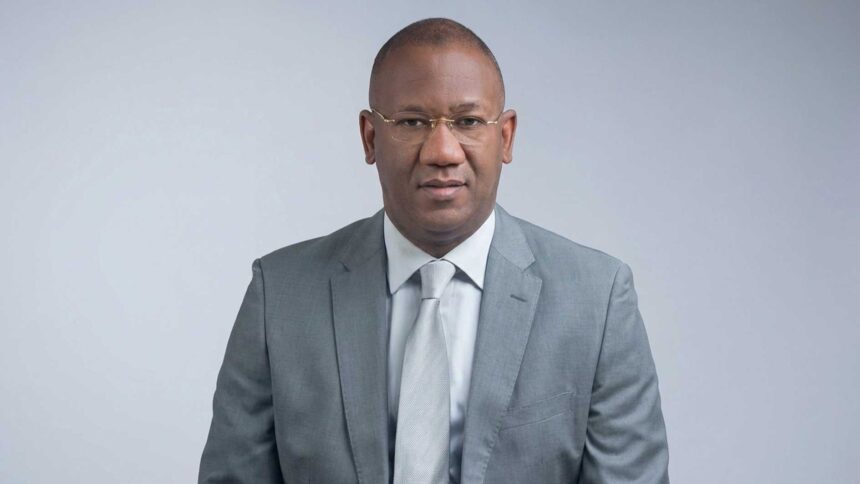
Former Labour Party vice-presidential candidate Datti Baba-Ahmed said on Tuesday, June 9, 2026, that he followed Peter Obi into the Labour Party in 2023 primarily out of sympathy, revealing that three prominent politicians who had promised to back Obi ultimately rejected him and contributed to the campaign’s defeat.
Baba-Ahmed made the remarks in a candid Daily Post interview in which he reflected on the 2023 presidential campaign and the lessons he had drawn from it. He said the experience had clarified for him that emotional solidarity was not a sufficient foundation for political coalition-building, and that any serious 2027 opposition project would need to be grounded in structural depth, regional balance, and clearly defined policy commitments.
‘I followed Peter Obi out of sympathy,’ Baba-Ahmed said, adding that some individuals who publicly championed the Obi movement in 2023 ultimately did not deliver the political support they had pledged. He declined to name the three politicians who he said rejected Obi, but said their withdrawal significantly weakened the campaign in critical states.
Related News
Lawal Locks Out APC and ADC
Meanwhile, former SGF Babachir Lawal escalated his break from mainstream party politics on Tuesday, declaring in a Daily Post interview that he had effectively eliminated both the APC and the ADC from his list of realistic political homes ahead of 2027. Lawal, who resigned from the ADC last week citing a massively rigged presidential primary in favour of Atiku Abubakar, said neither of the two parties had demonstrated the internal democracy that Nigeria needed from its major political organisations.
However, Lawal stopped short of naming a specific alternative party, saying he was in consultations with political allies and would make a firm announcement in due course. His comments signal that he may be gravitating toward a smaller party or a coalition arrangement that could give him more influence over candidate selection processes than he had in either the APC or the ADC.
Related News
Furthermore, the emerging fragmentation of Nigeria’s political middle ground ahead of 2027 is creating an increasingly complex picture for voters who supported neither the APC nor the PDP in 2023. Figures like Baba-Ahmed, Lawal, Peter Obi, and Rabiu Kwankwaso all occupy different positions in this space, and no single opposition coalition has yet crystallised around a shared candidate or platform. Notably, Dele Momodu had described Atiku Abubakar as Tinubu’s biggest 2027 challenger, suggesting that despite the fragmentation, the former vice president still commands the broadest opposition footprint. Consequently, the next several months will be critical in determining whether Nigeria’s opposition consolidates behind one candidate or splits the anti-Tinubu vote across multiple platforms as it did in 2023.
NDC’s Omo-Agege Dares Critics
In additional political news, Delta State politician Ovie Omo-Agege declared that he won his NDC primary with 100 per cent of the vote, mocking critics who had challenged the legitimacy of his emergence. Omo-Agege dismissed claims of irregularities in the NDC primary process, saying the results spoke for themselves. In addition, Rivers State’s Chinda faced questions about the legality of his political movement, with legislative lawyers arguing that his defection timeline raised grounds for disqualification under the constitution. As a result, the legal and political contestation surrounding 2027 candidate selections is already generating a wave of court filings and party disputes that will occupy the judiciary for months.