

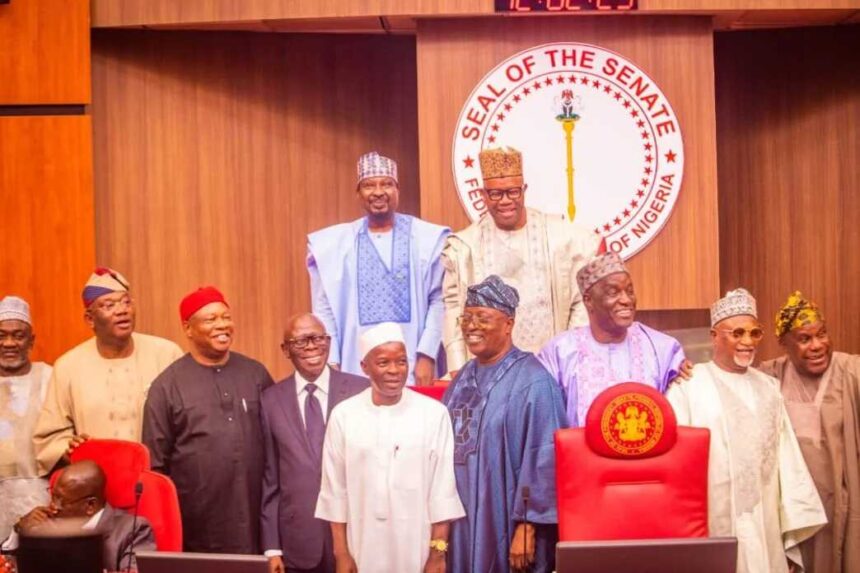
The Nigerian Senate pledged on Friday, June 6, 2026, to immediately resume work on the constitutional amendment required to establish state police when plenary reconvened this week, as the presidency confirmed that a framework for decentralised policing was nearing completion following months of executive, legislative, and security consultations.
Senate spokesperson Yemi Adaramodu confirmed in an interview with Sunday Punch that the upper chamber was giving its assurance that the constitutional amendment would be completed before the end of 2026. ‘We are giving our assurance that before the end of this year, the amendment will be done so that we can have the state police,’ Adaramodu said, adding that substantial groundwork, including geopolitical stakeholder consultations had already been completed.
Chief of Staff to the President Femi Gbajabiamila separately confirmed progress at a State House press briefing after a consultative meeting attended by Deputy Senate President Jibrin Barau, Deputy Speaker Benjamin Kalu, Attorney-General Lateef Fagbemi, and Inspector-General of Police Tunji Disu. ‘Right now, what we are looking at is the constitutional amendment itself, and then the enabling law would follow thereafter,’ Gbajabiamila said.
Related News
A Long-Running Demand Nears Resolution
The push for state police has been one of the most consistent demands from governors, security experts, and civil society groups across Nigeria for many years. President Tinubu formally requested the National Assembly to begin the constitutional amendment process, arguing that a decentralised policing structure would improve grassroots security, enhance intelligence gathering, and better protect communities from the escalating wave of banditry, kidnapping, and terrorism.
Adaramodu described state police as enjoying unusually broad political consensus, noting that the President, governors, and the legislature were all aligned. ‘State police is a popular demand. The President has signed into it, the state governors too have signed into it, and the National Assembly is in love with it,’ he said.
Related News
However, groups such as Miyetti Allah Cattle Breeders Association and the Pan-Yoruba organisation Afenifere have urged lawmakers to include strong safeguards in the legislation to prevent state governments from deploying police forces against political opponents or ethnic minorities. Furthermore, human rights lawyers warned that the success of state police would ultimately depend on how constitutional protections for citizens were written into the enabling law. Notably, the National Assembly has a tight legislative calendar given the proximity of the 2027 election cycle, making the timeline for completion ambitious but achievable if lawmakers maintain focus. Consequently, the coming weeks of plenary are seen as critical to delivering on the state police promise before political campaigning fully takes over the legislative agenda.
Akpabio Urges Prayer to Expose Terrorism Sponsors
Senate President Godswill Akpabio on Sunday called on Nigerians to pray for the exposure and prosecution of those sponsoring terrorism across the country, saying that identifying and punishing financiers of terror was as important as the military operations conducted against fighters in the field. His remarks came as the Senate prepared to reconvene for a session expected to be dominated by security legislation, constitutional amendments, and oversight hearings on the government’s insecurity response.