


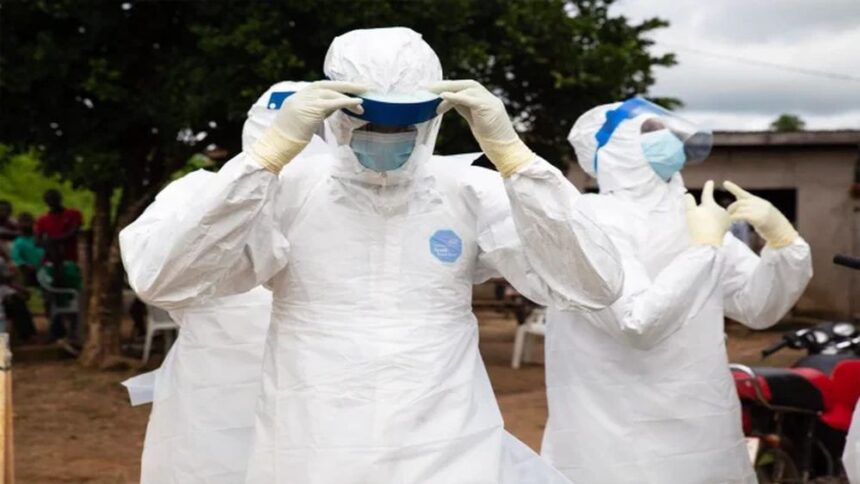
ABUJA — The Nigeria Centre for Disease Control and Prevention has formally placed Nigeria at high risk of Ebola importation following a dynamic risk assessment. The Nation reported the upgraded classification on Monday. NCDC alerted health workers across all 36 states and the FCT to heighten vigilance.
NCDC said the high-risk classification is based on the rapid expansion of the Bundibugyo Ebola outbreak in DRC, confirmed spread to Uganda, and Nigeria’s status as West Africa’s most connected air travel hub. The agency identified high-risk states, border communities, major transport hubs, and key international points of entry for enhanced monitoring.
NCDC Director-General Dr. Jide Idris said all health facilities must now maintain dedicated Ebola preparedness protocols including isolation unit readiness, personal protective equipment availability, and a clear staff chain of command for suspected case management.
Related News
What Has Changed
The upgrade from elevated alert to formal high-risk classification reflects the deteriorating outbreak situation in DRC. As of the latest data, over 900 suspected cases and more than 200 deaths have been recorded. Eighteen patients escaped a treatment centre in Mongbwalu after a community attack, severely complicating containment.
NCDC said the DRC outbreak started earlier than initially known. Red Cross volunteers who died between May 5 and 16 are now believed to be among the first victims, having contracted the virus on March 27. This means the virus circulated undetected for nearly seven weeks before formal response began.
Related News
Nigeria still has no confirmed Ebola cases as of Monday. However, with the risk classification now at high, the NCDC said it is treating the situation as a pre-outbreak preparedness emergency. It urged Nigerians to avoid travel to DRC and Uganda and to seek immediate medical help if they develop fever, vomiting, or unusual bleeding within 21 days of any travel to affected areas.