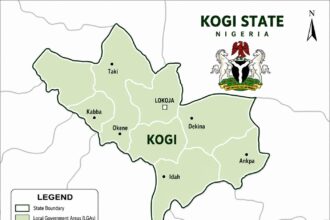


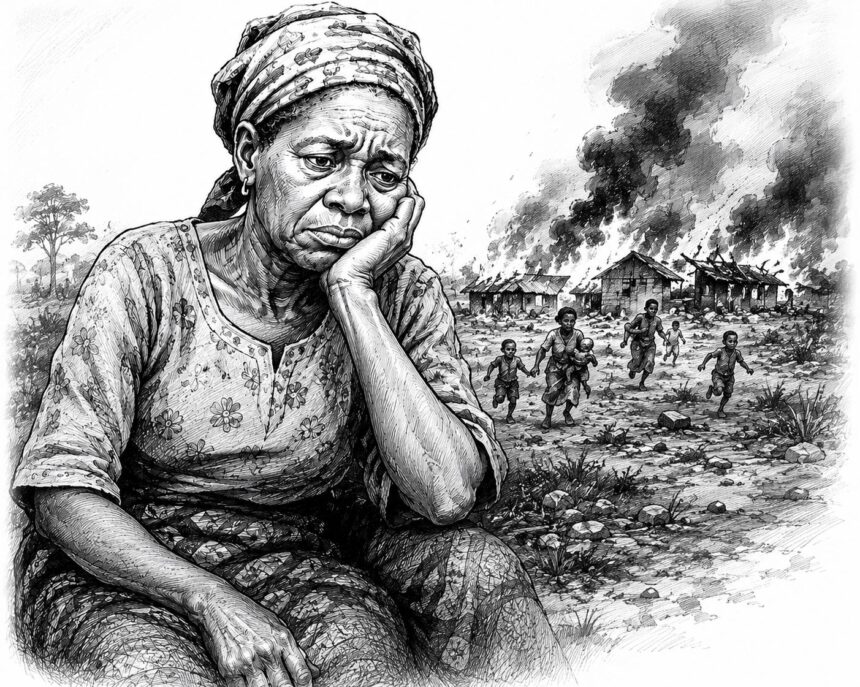
MAKURDI — Mama Ngover never thought she would be living on donated food at 62. She had farmed the same land in Logo Local Government Area of Benue State for four decades. She knew every slope, every rainy season pattern, every good planting month. Then the attacks came.
Armed herders destroyed her yam and cassava crops three seasons in a row. When she tried to return to plant again, men with guns chased her off the land. Her eldest son, who had stayed behind to guard the farm, was killed during one of the raids. She received the news by phone from a neighbour.
“I cannot go back to that land. They will kill me. My son is already gone. What else do I have to lose except my life?” she said at a food distribution centre in Makurdi, where she collects weekly rations from an NGO.
Related News
Mama Ngover is one of thousands of farmers in Benue, Plateau, and Kaduna states who have been driven from their land by the persistent violence between farming and herding communities. The conflict is not new. However, it has intensified in recent years as climate change shrinks grazing land and drives herders further south.
The Land She Cannot Return To
Benue State is one of Nigeria’s most productive agricultural zones. Known as the food basket of the nation, it produces yams, cassava, rice, and vegetables that feed millions across Nigeria. However, years of violence have left hundreds of communities unable to farm. The food basket is slowly emptying.
Related News
Mama Ngover does not understand the politics of the conflict. She does not know who owns the cows that destroyed her crops. She knows only that she planted, tended, and lost. And that nobody has been held accountable.
The Benue State Government has called for the establishment of cattle ranches to keep herders and their animals away from farmland. The federal government has been slow to implement any permanent solution. Victims like Mama Ngover say they have heard many promises. They are still waiting.
A Dignity Stripped Away
At the food distribution centre, she collects her ration with quiet dignity, careful not to jostle or complain. She says she was never the kind of woman who asked for help. She raised six children on what she grew. She buried her husband on the same land where she is now too afraid to plant.
An NGO worker at the centre, who asked not to be named, said Mama Ngover’s situation is representative of thousands of older women who lost everything to the conflict and are too old to start over somewhere new. “She cannot retrain, relocate, or restart. She just needs her land to be safe. That is all she is asking for,” the worker said.
The UN’s warning about 35 million Nigerians facing hunger between June and August 2026 resonates powerfully here. Mama Ngover is already living that hunger. Not as a statistic. As a daily reality.