


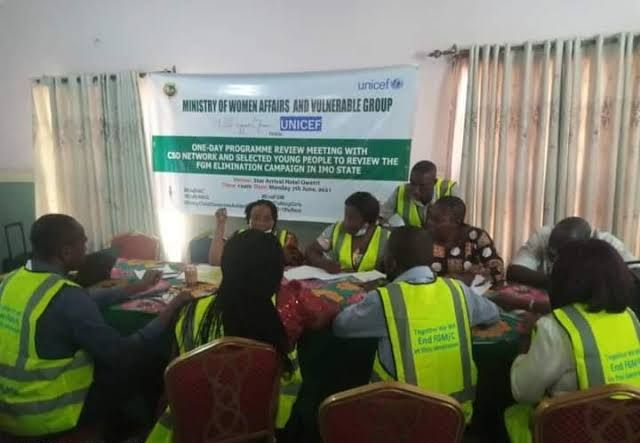
The Imo State Government has reiterated that anyone found guilty of carrying out female genital mutilation (FGM) faces up to 14 years imprisonment, as it steps up efforts to eliminate the practice and protect girls and women from its harmful effects.
The warning was issued during a media advocacy meeting in Owerri, where the state government drew attention to the provisions of the Imo State Female Genital Mutilation (Prohibition) Law 2017. The law criminalises various forms of FGM and prescribes stiff penalties for offenders.
Representing the Commissioner for Women Affairs and Social Welfare, Nkechinyere Ugwu, the Permanent Secretary, Godson Okeoma, said the law prohibits any act that involves cutting, piercing, altering or mutilating the genital organs of a female. He noted that offenders are liable upon conviction to a 14-year prison term or a fine of N250,000.
Related News
The government also warned against discrimination, intimidation or abuse directed at anyone who refuses to undergo the procedure, stressing that such actions are punishable under the law.
Speaking on the wider impact of the practice, the commissioner described FGM as a violation of the rights, dignity and health of girls and women. She said the procedure offers no medical benefit and can expose victims to long-term physical, emotional and reproductive health complications.
According to the ministry, despite years of awareness campaigns and interventions by government agencies, development partners and civil society organisations, FGM still persists in some communities. Authorities say ending the practice requires sustained public education and stronger community support.
Related News
The state government said it is working with relevant stakeholders to accelerate the abandonment of FGM across Imo. Officials stressed that cultural beliefs should never override the safety, health and fundamental rights of girls and women.
The renewed warning comes as advocacy groups continue to push for stricter enforcement of anti-FGM laws and greater protection for vulnerable girls. State authorities called on parents, traditional rulers, religious leaders and community members to join efforts aimed at ending the practice permanently.
For the government, the message is clear: protecting girls from female genital mutilation is a shared responsibility, and those who ignore the law risk severe legal consequences.